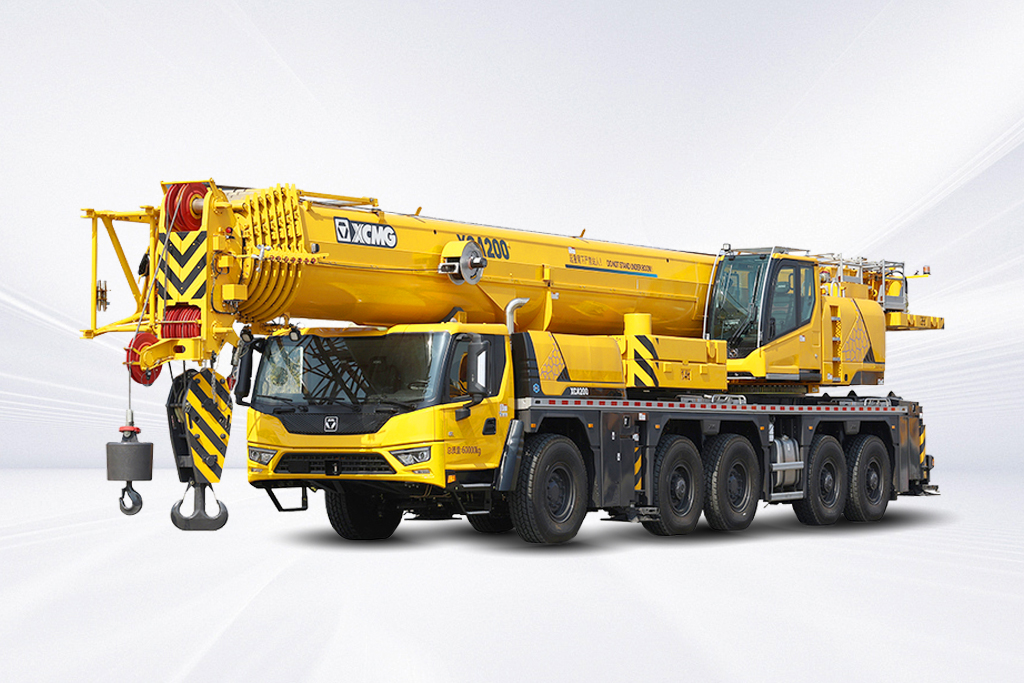
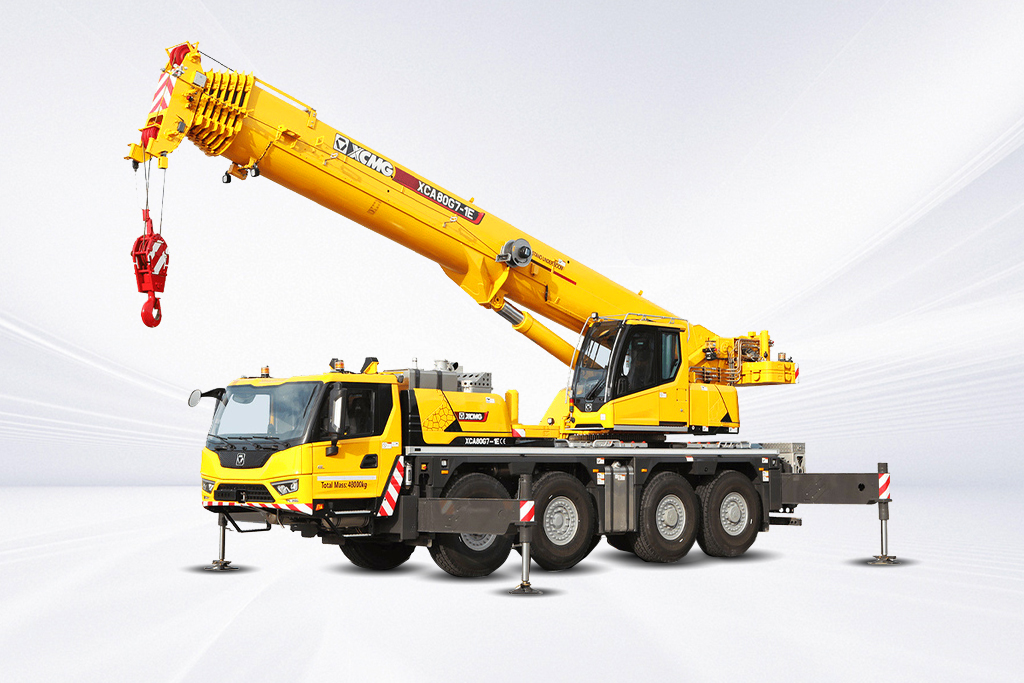
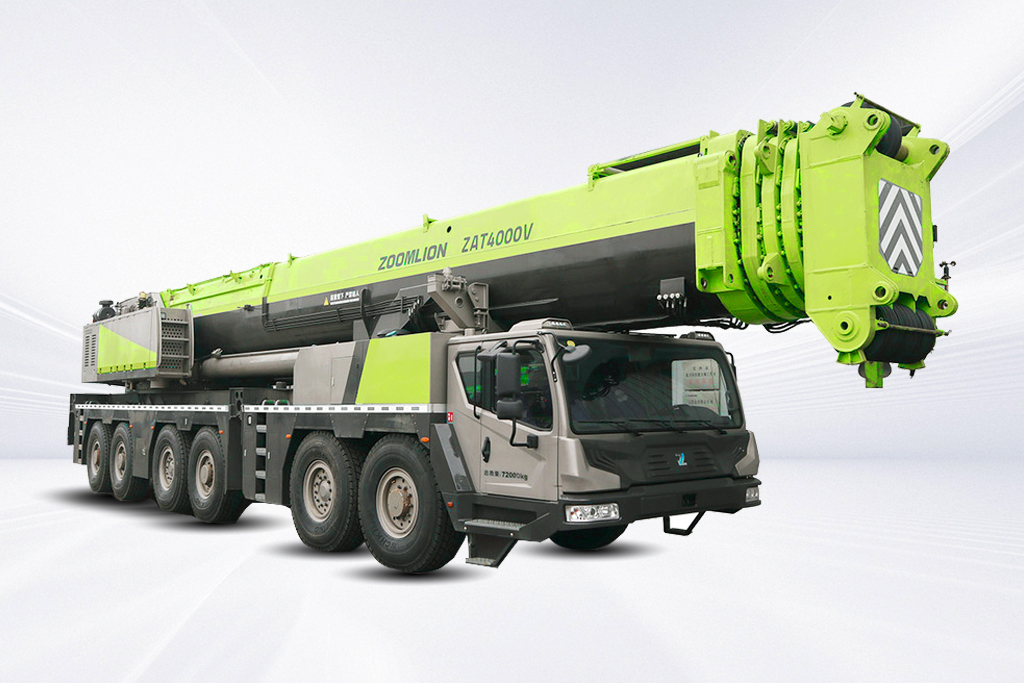
A telescopic crane truck is a mobile lifting vehicle equipped with a boom consisting of several nested square or rectangular tubes that extend and retract via hydraulic cylinders. This design allows for a significant increase in reach and lift height from a compact transport configuration. The telescopic boom is mounted on a full-rotation slewing ring atop a truck chassis, providing 360-degree operational capability. These cranes are valued for their straightforward, robust design and ability to provide excellent vertical reach, making them ideal for tasks like placing equipment on rooftops, lifting materials to higher floors during construction, loading/unloading from a distance, and performing utilities work. They are available in a wide range of sizes, from small units on utility trucks to massive cranes on multi-axle carriers for heavy construction. Key features include multiple boom sections for extended reach, powerful winches for hoisting, outriggers for stability, and modern control systems with safety devices like load moment indicators to ensure safe operation within the crane's rated capacity.
The core of the crane is the Multi-Stage Telescopic Boom Assembly. Constructed from high-strength, low-alloy steel, the boom is comprised of a series of box-section arms that nest inside one another. Using a combination of hydraulic cylinders (for the initial sections) and pulley-and-cable systems (for the outer sections), these arms extend sequentially to achieve their full working length. This design provides a tremendous advantage in transport; the crane can have a reach of 40 meters or more yet stow to a length of only 10-15 meters, complying with road regulations. The rectangular box design offers superior resistance to bending loads compared to a lattice boom of similar weight, making it ideal for handling loads at a distance. The boom is mounted on a robust slewing bearing that allows for continuous 360-degree rotation, enabling the operator to position the load from any angle around the truck.
To lift the load itself, the crane relies on a Powerful Hoisting and Control Systems. The main winch, or Hoisting Mechanism, is a high-torque hydraulic motor driving a drum around which the wire rope is wound. This system is designed for precise control, both in lifting heavy loads and in lowering them smoothly. Many winches are part of a Closed System which offers better control and prevents free-spooling. A critical feature for efficiency is the Free-Fall Hook Function, which allows the operator to quickly lower the empty hook under its own weight to the desired height, saving significant time over powering down. The operator manages this power through Pilot Hydraulic Controls. These joysticks provide effortless and proportional command over all functions: boom extension/retraction, boom elevation, winch up/down, and swing. The system allows for Electronic Precision Micro-Movement, enabling the operator to make tiny, precise adjustments for final load placement, which is crucial when setting sensitive equipment or working in congested areas.