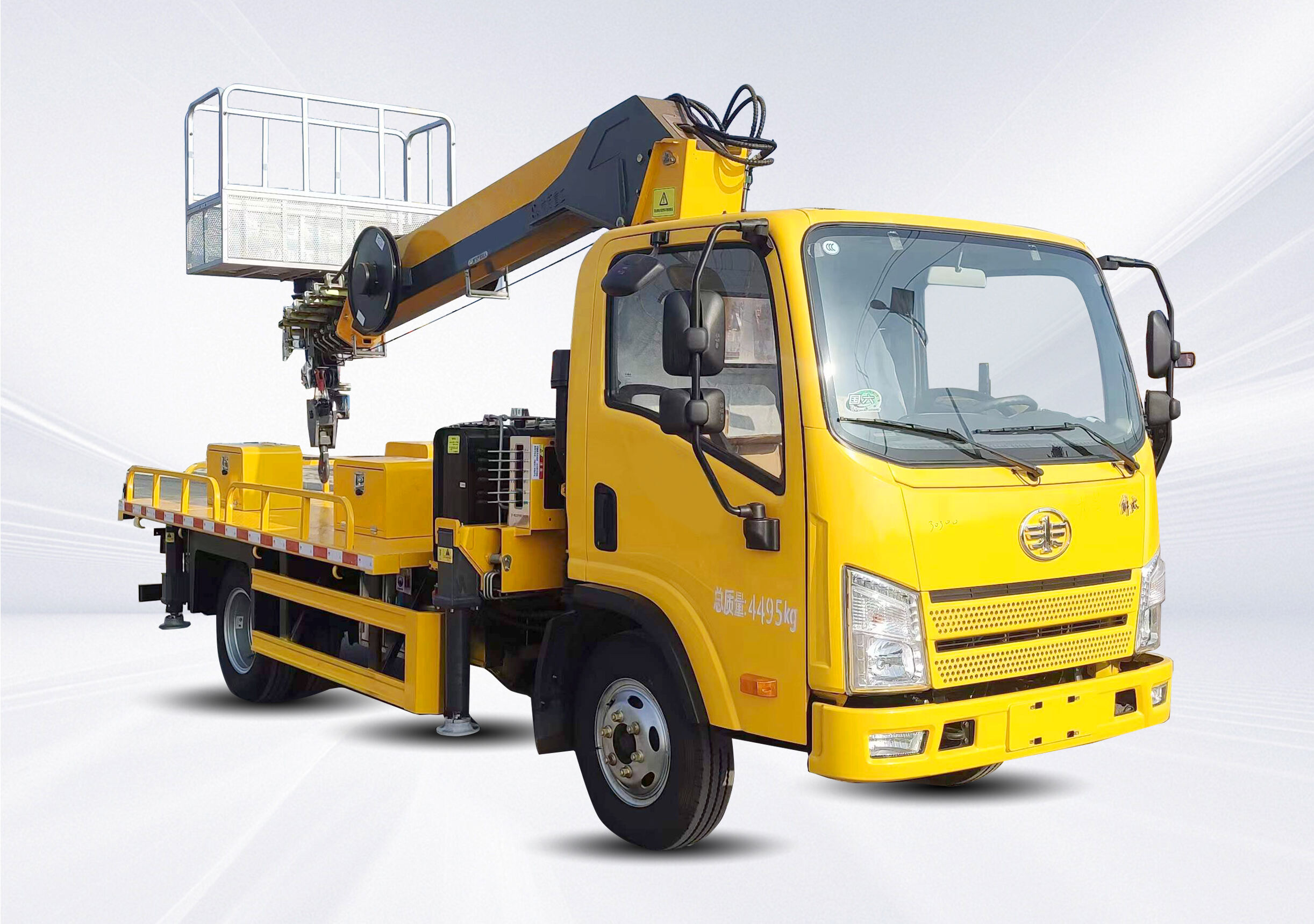
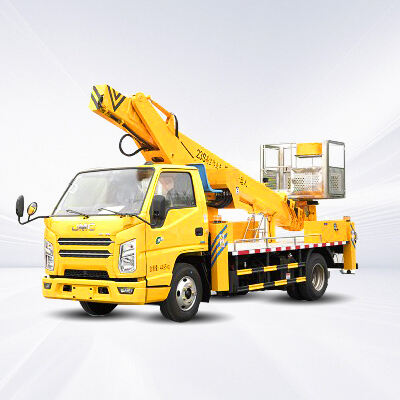
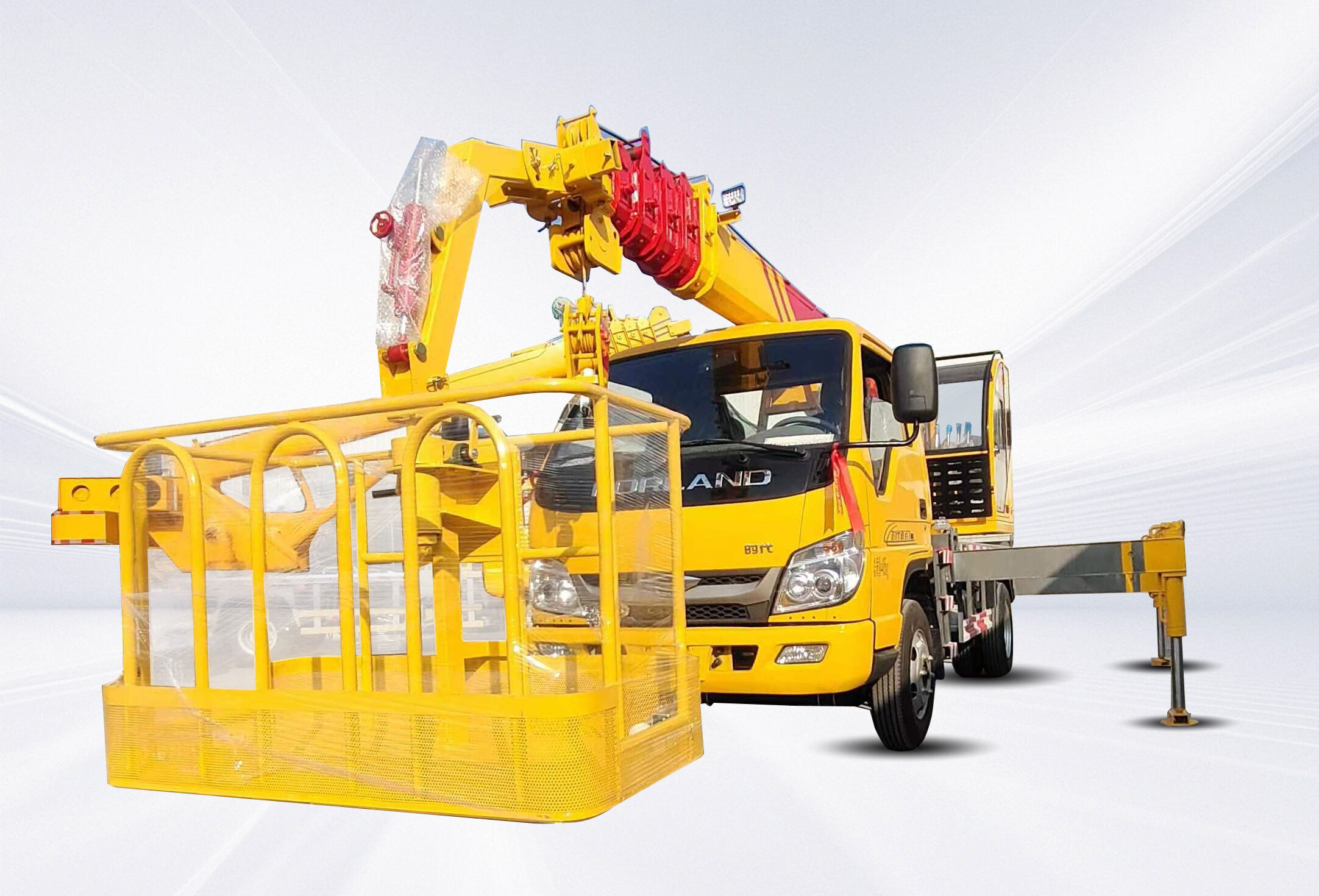
A bucket crane truck, also known as a bucket truck or aerial work platform truck, is a specialized vehicle designed for safe and efficient access to elevated work areas. It integrates a hydraulic crane-like mechanism, typically a telescopic or articulating boom, mounted on a truck chassis, with a personnel platform (bucket) attached to its end. The primary function is to lift workers, along with their tools and materials, to overhead locations for tasks such as electrical line maintenance, tree trimming, street light repair, and telecommunications work. Unlike standard crane trucks focused on lifting heavy loads, the bucket truck prioritizes precise and safe positioning of personnel. Key features include insulated booms for live electrical work, proportional hydraulic controls for smooth movement, emergency descent systems, and comprehensive safety interlocks that prevent unsafe operations. The truck provides a stable base, often with outriggers, and the mobile platform allows crews to quickly move between job sites, making it an essential asset for utility companies and municipal services.
The most visible component is the Articulating/Telescopic Boom with Personnel Platform. While some models use a straight telescopic boom, many feature an articulating knuckleboom design. This design includes multiple hinged sections that allow the boom to "fold" and articulate, providing exceptional flexibility to reach up and over obstacles like trees or buildings from a single set-up position. The boom is made from lightweight yet high-strength materials, often fiberglass or composite for models designed for live electrical work (dielectric insulation), or steel for non-insulated applications. At the end of the boom is the personnel platform, or "bucket," which is ergonomically designed with non-slip floors, built-in tool trays, and safety harness attachment points. The entire structure is engineered for minimal deflection and precise positioning, ensuring a stable work platform for the technicians.
As the platform lifts personnel, Stability and Safety Interlock Systems are absolutely paramount. Before the boom can be elevated to any significant degree or the platform can be moved away from the centerline of the truck, the vehicle must be stabilized. This is achieved through hydraulic outriggers that extend to lift the truck tires off the ground, creating a rigid and level base. The interlock system is a network of sensors and hydraulic or electronic controls that prevent unsafe operations. For example, the interlock will typically prevent the boom from being raised unless the outriggers are fully deployed and the truck is properly stabilized. It may also limit the movement of the boom or the swing of the platform based on the boom's angle and extension to prevent the machine from tipping or from putting the bucket in a hazardous position.
The Precision Control and Emergency Systems are designed for operator confidence and redundancy. The boom functions are controlled by the technician in the bucket using a proportional hydraulic control console. These controls allow for incredibly smooth and minute movements (Electronic Precision Micro-Movement), enabling the operator to navigate the platform through tight spaces like tree canopies or around power lines with utmost care. Beyond normal operation, multiple redundant Emergency Safety Systems are in place. These almost always include an emergency engine shut-off at the platform, a manual override for the controls, and most critically, an Emergency Descent System. This system typically consists of a backup battery-powered pump or a gravity-fed hydraulic valve that allows the platform to be lowered safely to the ground in the event of a main engine or hydraulic system failure, ensuring the safety of the personnel under any foreseeable circumstance.

 EN
EN