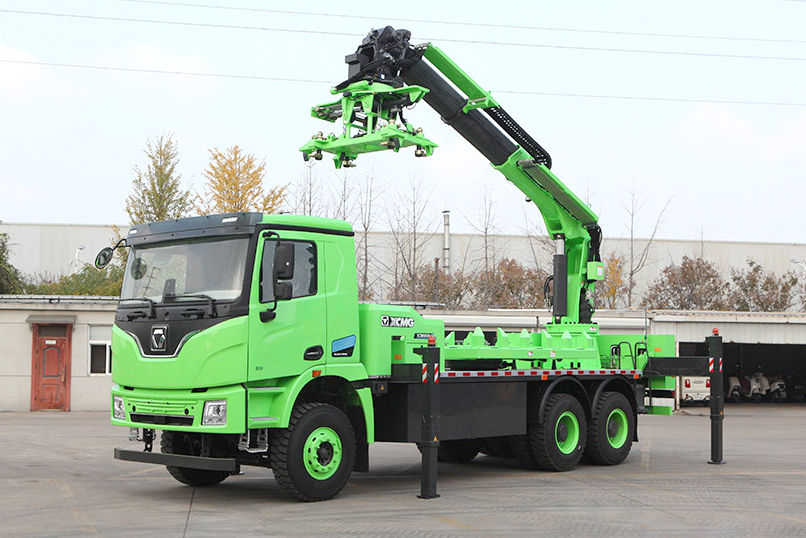
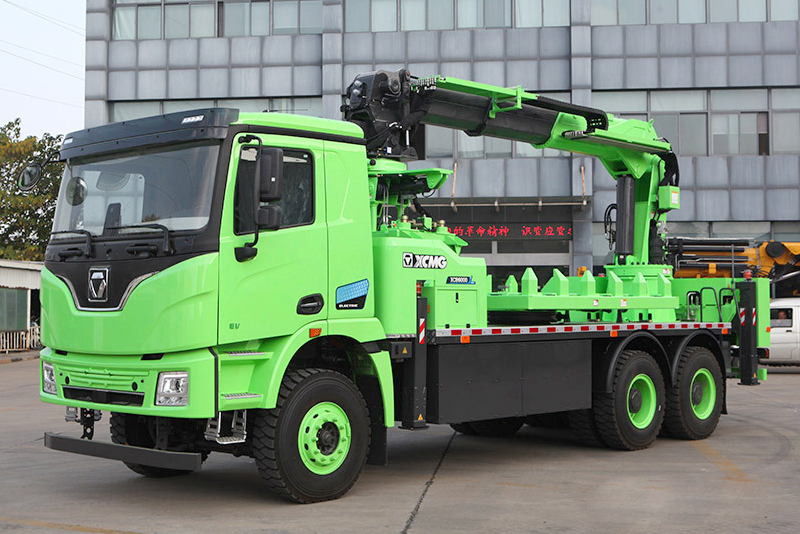
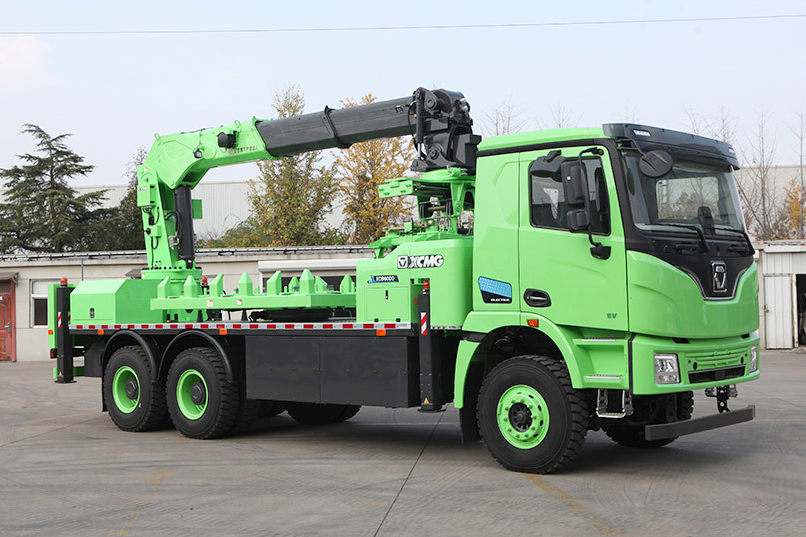
A 2-ton truck crane is a compact and economical lifting solution designed for light-duty applications where mobility and ease of use are paramount. Mounted on a light commercial truck or van, this crane is perfect for handling loads up to 2 metric tons in weight. It is commonly used by delivery services for appliances and equipment, by electricians and plumbers for lifting tools and materials, in warehouse environments, and for general maintenance tasks. The crane typically features a simple two or three-section telescopic boom, manual or hydraulic rotation, and straightforward stabilizer legs instead of complex outriggers for quick setup. Controls are often via a simple pendant or a set of levers, making it operable by personnel without extensive crane training. Despite its small size, it incorporates essential safety features like an overload warning system. The 2-ton truck crane's greatest asset is its ability to provide mechanical lifting assistance exactly where it's needed, dramatically reducing manual labor, increasing efficiency, and minimizing the risk of injury on the job.
The entire system is built around an Ultra-Compact and Lightweight Design. The crane itself is relatively small, with a boom typically consisting of two telescoping sections made from high-strength steel to keep weight down. This minimal size and weight are crucial because they allow the crane to be mounted on a lighter-class commercial vehicle—such as a medium-duty truck or a large van—without significantly impacting the vehicle's payload capacity, driving dynamics, or fuel economy. The stowed profile is low and short, ensuring it doesn't obstruct the driver's vision or make the vehicle impractical for daily driving and navigation in urban environments. The compact design is a direct response to the need for a lifting tool that can go anywhere the truck can go, without being a burden.
For the users of a 2-ton crane—often delivery drivers or tradespeople—time is of the essence. Therefore, Rapid Deployment and User-Friendly Operation are critical. The stabilization system is designed for speed, often using simple, fast-acting hydraulic stabilizers (scissor-style or simple down-acting legs) rather than full outriggers. These are deployed in a matter of seconds to lift the vehicle's rear axle and provide a stable base for lifts directly behind or to the side of the truck. The controls are deliberately simple; often a handheld pendant with clearly marked buttons or a small bank of levers for boom up/down, extend/retract, and winch control. The operation is intuitive, requiring minimal training. The goal is to allow the user to arrive on site, deploy the stabilizers, and complete a lift in just a few minutes, integrating seamlessly into their workflow without causing significant delays.
Despite its simplicity and focus on speed, Essential Integrated Safety is not overlooked. The most important safety feature on a modern 2-ton crane is an Overload Warning System or a basic Moment Limiter. This system, while perhaps not as sophisticated as on larger cranes, monitors the hydraulic pressure in the lifting circuit. When the pressure indicates a load is approaching the crane's safe working limit (which varies with boom angle and extension), it will trigger a loud audible alarm and a visual warning light to alert the operator. This prevents accidental overloading, which could damage the crane or the vehicle, or cause a stability issue. This built-in safety net is vital because it protects the operator—who may not be a lifting expert—from making a critical mistake, ensuring that the convenience of the crane does not come at the expense of safety.