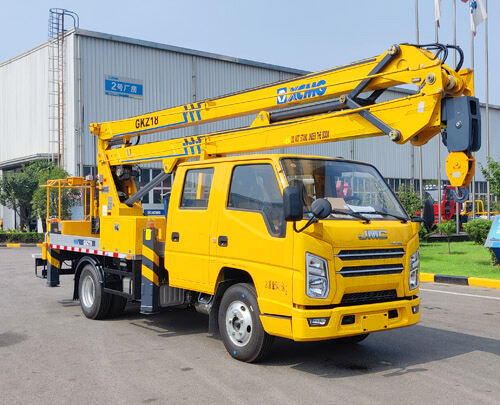
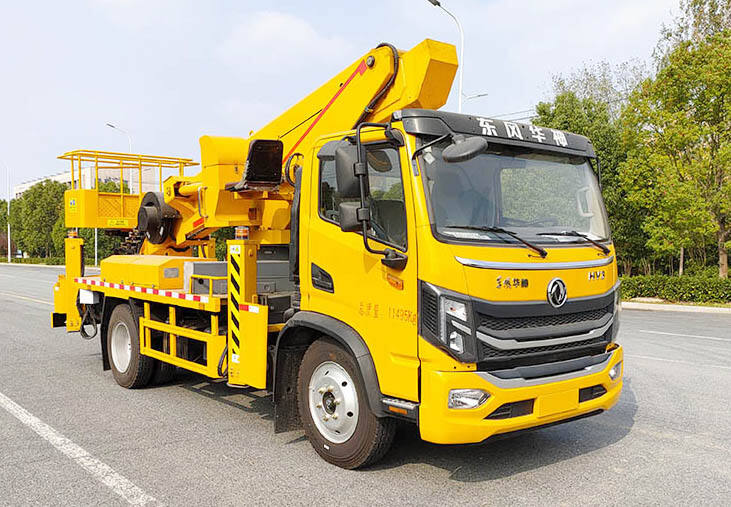
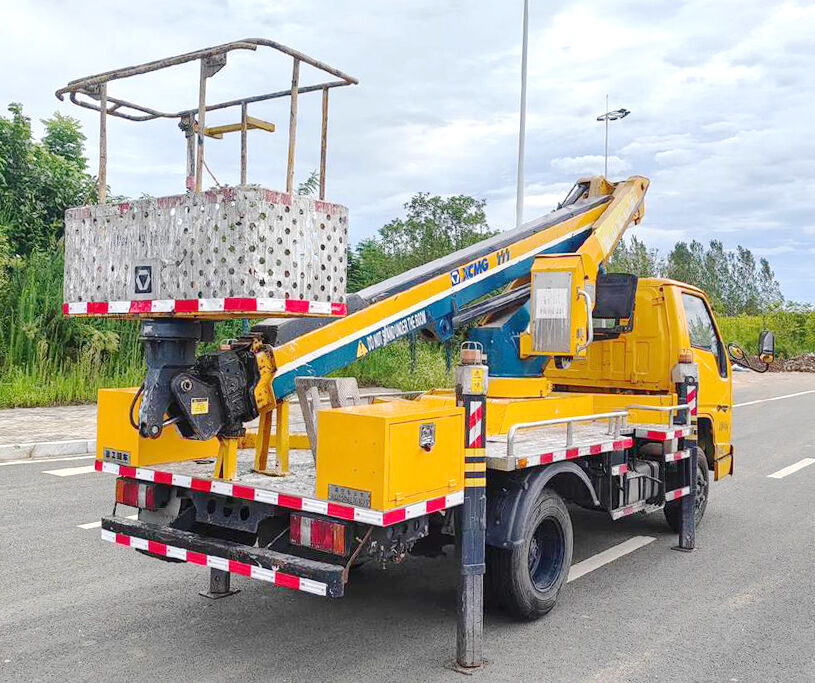
A basket crane truck, also known as a personnel crane truck or a man-basket equipped crane, is a dual-purpose vehicle designed for both material handling and elevated personnel access. It integrates a standard hydraulic crane (often telescopic) mounted on a truck chassis with a specially designed personnel platform (basket) that can be attached to the crane's hook or a dedicated attachment point. This configuration allows the truck to not only lift tools and materials but also safely raise workers to overhead work sites for tasks like building maintenance, tree trimming, sign installation, and electrical repairs. Critical safety is the paramount concern, and these systems are designed with features to protect the personnel in the basket, including load moment indicators that account for the basket's weight, emergency descent systems, smooth and precise hydraulic controls, and often interlock systems that limit crane functions when the basket is attached. It is a versatile solution for crews that need both lifting power and safe access, combining two functions into one mobile and efficient unit.
The most visible component is the Personnel Platform (Basket) itself. This is not a simple metal bucket but an OSHA or equivalent standards-compliant platform designed specifically for human occupancy. It features non-slip floors, protective toe boards and mid-rails, built-in tool trays, and dedicated anchor points for workers to attach their safety harnesses' lanyards. The method of attachment to the crane is critical. It must use a positive, fail-safe connection, such as a dedicated shackle point on the boom tip designed for this purpose, rather than simply being suspended from the main hook. Some platforms are even equipped with their own independent rotation and leveling mechanisms to keep the floor horizontal regardless of the boom's angle, ensuring a safe and comfortable working environment for the technicians inside.
Governing the entire operation are Enhanced Safety Control and Interlock Systems. These are the electronic and hydraulic safeguards that prevent unsafe operation. When the personnel platform is connected, the crane's control system should recognize this configuration. A primary feature is a Capacity Limiter Override: the crane's computer knows the weight of the basket and its maximum allowed personnel/tool capacity, and it will restrict the crane from lifting any additional external load, ensuring the crane is only used for personnel lifting. Interlocks are crucial; they may prevent the crane from being operated from the truck cab, forcing the use of the Remote Control from within the basket itself, so the operator has the best visibility. They might also limit the boom's movement speed, extension, or range of motion to smoother, slower, and safer parameters. An Emergency Descent System is mandatory, providing a backup power source (e.g., a battery-powered pump) or a gravity-assisted lowering valve to ensure the platform can be safely lowered to the ground in the event of a main engine or hydraulic system failure.
The actual lifting and positioning are handled by Precision Lifting and Positioning Mechanics. The crane must provide exceptionally smooth and controlled movement to avoid jostling the personnel in the basket. This is achieved through high-quality Pilot Hydraulic Controls that offer proportional and effortless operation. The hydraulic system is designed to minimize jerky movements and provide fine Electronic Precision Micro-Movement for the final adjustment of the platform's position. The crane's Telescopic Boom must be robust and exhibit minimal deflection or bounce during movement to maintain a stable platform. The operator in the basket uses the remote control to carefully maneuver into position, often needing to navigate around obstacles like tree branches or building eaves. This requires a level of control fidelity that is far superior to that needed for standard material handling, making the quality of the hydraulic system and controls a paramount feature of the basket crane truck.

 EN
EN