
 EN
EN
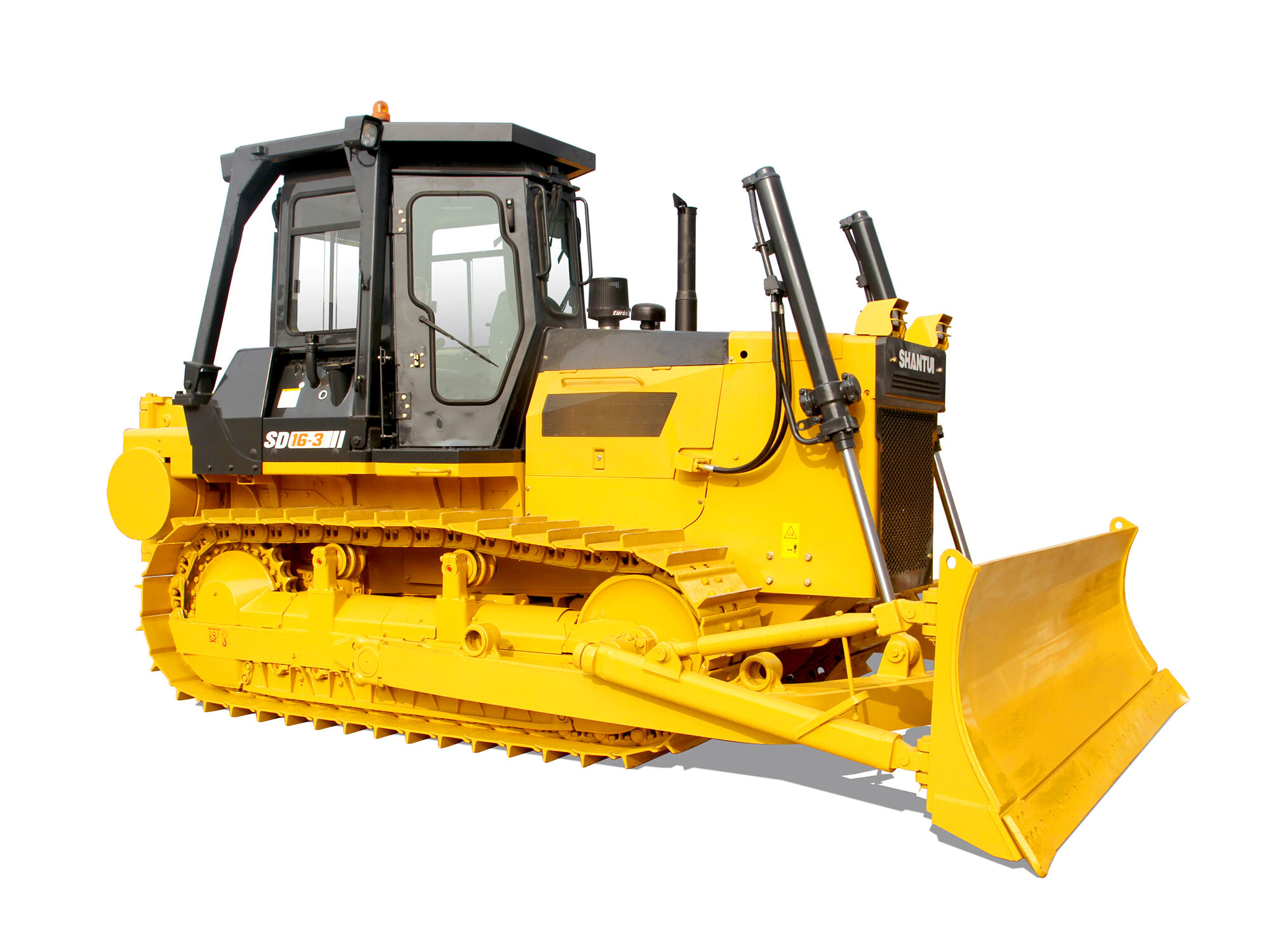
Technical Background
Large-scale construction projects—including major earthworks, mining site development, dam construction, and highway corridor work—impose extreme demands on machine traction, structural stiffness, and productive uptime. In these contexts, bulldozers remain the primary workhorses because their design directly addresses the physics of mass movement: wide contact area, high drawbar pull, and blade geometry that converts engine torque into productive soil displacement. Over decades, the basic bulldozer architecture has been optimized to deliver repeatable cycles under heavy load, resisting torsion and maintaining control on slopes and uneven benches.
From an engineering standpoint, three subsystems determine the capability envelope of modern bulldozers: the undercarriage, the blade/ripper toolkit, and the powertrain/thermal management system. The undercarriage provides ground engagement and directional stability; poor undercarriage design increases rolling resistance and accelerates wear. The blade and ripper are the direct interfaces with material—blade shape, cutting edge metallurgy, and wear protection define how efficiently a bulldozer can penetrate, lift, and carry material. Finally, the powertrain and cooling architecture must sustain high torque demands and repeated stalls without thermal derate; this is where wide-span cooling and robust fan control become mission critical.
Operational reliability in heavy projects also depends on maintainability: rapid access to wear items, modular replacement of cutting edges, and predictable service intervals reduce downtime. Consequently, modern bulldozers incorporate design choices—service doors, standardized wear parts, and onboard diagnostics—that reduce mean time to repair. As projects scale up, the economics of a fleet of bulldozers favor machines that combine high productivity per hour with low lifecycle cost per cubic meter moved. In short, the technical baseline for contemporary bulldozers balances mechanical robustness, thermal capacity, and serviceability to meet the throughput and reliability targets of large-scale construction.
Product Features
The defining hardware features that make bulldozers indispensable are straightforward but exacting in their engineering.
Tracked Undercarriage
A properly designed tracked undercarriage spreads load and prevents excessive ground pressure, enabling a bulldozer to operate on soft subgrades and steep slopes. Modern undercarriages use sealed-and-lubricated track chains, hardened rollers, and optimized sprocket profiles to minimize rolling resistance while maximizing wear life. Shock-absorbing mounts and robust final drives reduce transient loads on the drivetrain during heavy dumping cycles.
Wear-Resistant Blades
The blade is the productivity interface. High-performance bulldozers use alloyed cutting edges, bolt-on wear segments, and replaceable bolt patterns so field crews can renew the wearing surfaces quickly. Carbide overlays, abrasion-resistant steel grades, and replaceable end bits prolong life in abrasive contexts such as gravel and blasted rock. Blade geometry—S, SU, or U—is selectable to match material behavior and duty cycle, allowing a single bulldozer to adapt to multiple tasks.
Wide-Track Optionality
Many large projects require either low ground pressure or increased flotation. Bulldozers that offer bolt-on wide-track options (LGP shoes) provide that flexibility. Wide tracks reduce ground bearing pressure, limit rutting, and improve mobility on marshy or soft soils. Quick-change shoe systems and modular pad widths allow fleet managers to tailor a bulldozer to seasonal or site-specific conditions without major downtime.
Additional product features include reinforced weldments and anti-torsion frame design to preserve structural integrity under asymmetric loads, heavy-duty cooling packages to maintain thermal headroom, and operator-centric cab design to reduce fatigue. Collectively, these features ensure that bulldozers deliver continuous, high-volume production with predictable maintenance cycles.
Innovation Content
Recent engineering innovations are elevating bulldozers from robust mechanical platforms to smart, optimized productivity nodes on large sites. Innovations fall into materials science, undercarriage engineering, thermal systems, and systems integration.
Advanced Blade Metallurgy and Modular Wear Systems
New wear alloys and surface treatments extend blade and cutting-edge life substantially. Proprietary quenched and tempered steel with adaptive carbide inserts resist micro-chipping in mixed-abrasion environments. Modular bolt-on wear segments, combined with standardized mounting geometry across machine families, reduce stock complexity and enable rapid field swaps—a practical innovation that shortens downtime for bulldozers.
Adaptive Tracked Undercarriage Designs
Next-generation bulldozers deploy active track tensioning and segmented rollers. Active tension control maintains optimal track tension under variable loads, reducing slip and wear. Segmented or floating rollers distribute load peaks and can be individually replaced. Some designs introduce polymer-composite dampers in the undercarriage to reduce shock loads transmitted to the frame, prolonging hull life and improving operator comfort.
Modular Wide-Track Systems
Rather than fixed LGP shoes, innovative bulldozers now use bolt-on wide-track modules that can be installed in the field with simple tooling. Quick-release link pins and indexed shoe assemblies allow fleet technicians to switch between standard and wide tracks within hours. This modularity increases fleet utilization of each bulldozer across diverse site conditions.
Thermal Management and Wide-Span Cooling Innovations
Bulldozers exposed to dust and high ambient temperatures benefit from reversible, variable-speed fans and swing-out core radiators with wide fin spacing for efficient debris shedding. Intelligent fan control algorithms power the fan only when necessary, preserving engine power and lowering fuel consumption. Advanced coolant and hydraulic oil routing with staged heat exchangers further stabilizes temperatures under prolonged load, preventing thermal derates that would reduce a bulldozer’s productivity.
Systems Integration, Monitoring, and Predictive Maintenance
Modern bulldozers ship with multi-sensor platforms: vibration sensors on rollers and pins, temperature probes on final drives, and oil condition monitors. Telematics platforms aggregate this data and run machine-learning models to predict wear trends. The result: targeted service alerts before a failure—enabling higher uptime. For example, a bulldozer may automatically alert the service team when a roller exhibits anomalous vibration, prompting preemptive replacement during a scheduled window rather than unplanned stoppage.
Powertrain and Efficiency Advances
Hybrid-assist systems and electronically managed torque delivery reduce transient fuel spikes during high-draw tasks. Engine control units that map torque to ground load allow a bulldozer to operate in the most efficient band of engine speed and fuel consumption. Electrification of auxiliary systems (e.g., hydraulic pumps with variable displacement control) also contributes to lowered fuel use and smoother response.
Automation and Operator Aids
Semi-autonomous blade control and 3D grade guidance systems enable a bulldozer to execute repetitive grading patterns with reduced operator input, increasing per-hour volume and reducing rework. Coupled with low-vibration cabs and ergonomically optimized controls, these systems increase effective operator productivity and decrease fatigue.
Each of these innovations synergizes: advanced wear materials reduce replacement frequency, modular undercarriage systems decrease adaptation time, better cooling maintains continuous output, and digital monitoring locks in uptime. The combined effect for fleets of bulldozers is measurable—higher throughput per machine, lower cost per cubic meter, and improved schedule certainty on large-scale projects.
Market Significance
The market impact of these technical advances is significant. Contractors investing in modern bulldozers gain higher productivity, lower operating cost, and greater flexibility across varied terrains. The ability of a single bulldozer to accept modular wide-track kits and durable blade systems means fewer specialty rentals and better fleet utilization. Predictive maintenance and telematics reduce emergency service trips and the associated schedule risk—an outcome that is financially material on projects moving millions of cubic meters.
From a procurement and lifecycle perspective, the capital outlay for advanced bulldozers is offset by lower fuel consumption, extended wear intervals, and reduced downtime. In aggregate, these improvements lower the total cost per cubic meter moved, shorten project schedules, and increase contractor competitiveness. Environmentally, reduced fuel use and fewer replacement parts translate to lower embodied carbon over the machine’s life.
In summary, bulldozers remain essential for large-scale construction because they combine mechanical advantage, adaptable configurations (tracked undercarriage, wear-resistant blades, and wide-track options), and now smart engineering innovations that drive both operational and commercial value across the market.