
 EN
EN
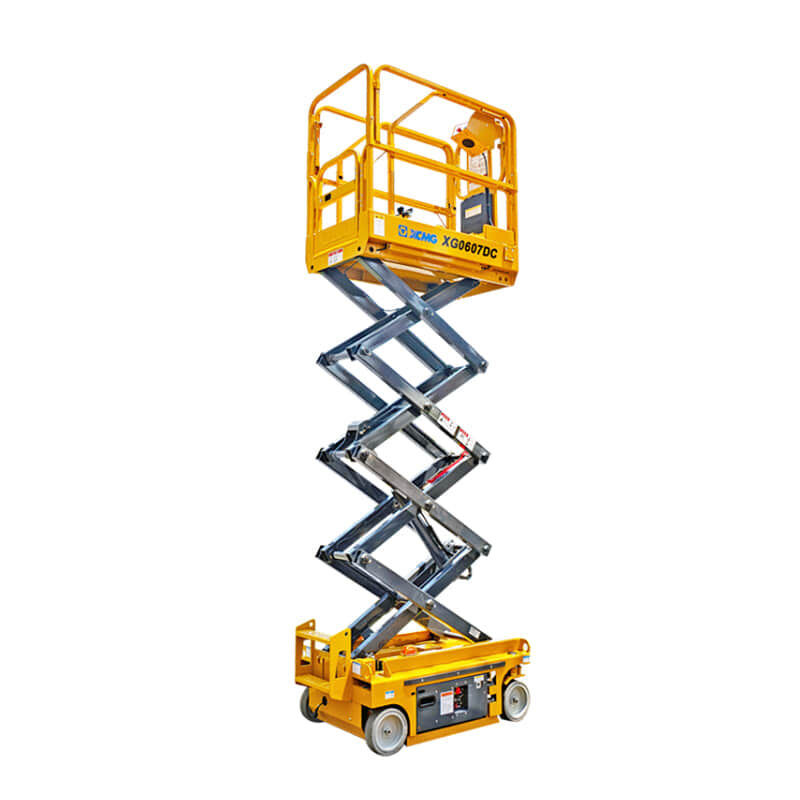
As an operation worker who has spent years working with various aerial platforms, I can attest to the fact that articulated aerial platforms are truly outstanding when it comes to maneuverability. In our line of work, where we often have to access tight spaces, work around obstacles, and reach precise locations at heights, the ability to move freely and precisely is of utmost importance. Articulated aerial platforms have become my go-to choice for many jobs, and in this article, I'll share from my own experience why they offer such superior maneuverability and how they make our work much easier and more efficient.
Key Features of Articulated Aerial Platforms
The first remarkable feature of articulated aerial platforms is their unique jointed design. Unlike some traditional aerial platforms that have a fixed structure, articulated aerial platforms are equipped with multiple articulated joints. These joints allow the platform to bend and twist in various directions, enabling it to navigate through narrow passages and around corners with ease. For example, when we were working on the maintenance of a factory building with numerous pillars and machinery in the way, our articulated aerial platform could effortlessly snake its way between them to reach the areas that needed attention. It's like having a flexible arm that can adapt to the complex layout of the work environment, which is a huge advantage compared to platforms with less flexible designs.
The ability to reach over and around obstacles is another key aspect of their maneuverability. With the articulated sections, we can extend the platform in a way that allows us to bypass objects that would otherwise block our access. In a construction site where scaffolding or unfinished structures are present, an articulated aerial platform can be positioned on one side and then articulated to reach over these obstacles to get to the exact spot we need to work on. This means we don't have to waste time moving large amounts of equipment or finding alternative, often more complicated, routes to reach our work areas. It gives us the freedom to approach our tasks from the most convenient angles.
The precise positioning that articulated aerial platforms offer is also worth highlighting. The controls are designed in such a way that we can make fine adjustments to the position of the platform in multiple dimensions. Whether it's moving a few inches horizontally, vertically, or rotating slightly to align perfectly with a particular work target, we can do it with great accuracy. When installing delicate electrical fixtures on a high ceiling, I can use the controls of the articulated aerial platform to position myself precisely where I need to be, ensuring that the installation is done correctly and efficiently. This level of precision is something that not all aerial platforms can provide, and it makes a significant difference in tasks that require meticulous attention to detail.
Moreover, the compact size when retracted is an advantage for maneuverability too. Articulated aerial platforms can often be folded or retracted into a relatively small footprint, which allows them to be easily transported around the job site and even fit through standard doorways in some indoor applications. This means we can quickly move them from one location to another without much hassle, and they can access areas that might be off-limits to larger, less compact aerial platforms. For instance, when we were doing maintenance work in a multi-story office building, our articulated aerial platform could be taken up in the elevator and then moved to different floors with ease, ready to be deployed wherever needed.
Another feature that contributes to their superior maneuverability is the stability they maintain even when in articulated positions. Despite the fact that they are bending and moving in different directions, the design ensures that the platform remains stable and safe for us to work on. The weight distribution and the engineering of the hydraulic or mechanical systems that support the articulation work together to prevent any wobbling or instability. This gives us the confidence to focus on our tasks without worrying about the platform tipping over or shaking, which is crucial when we are working at significant heights.
Manufacturing Advantages of Articulated Aerial Platforms
The manufacturing process of articulated aerial platforms incorporates several elements that enhance their maneuverability. High-quality materials are used in constructing the articulated joints and the overall structure. The materials are chosen for their strength and flexibility, allowing the joints to bend repeatedly without wearing out or losing their integrity. For example, special alloys are often employed for the key components that make up the articulation mechanism, ensuring that they can withstand the stress and strain of continuous movement and positioning.
Advanced manufacturing techniques are also utilized. Computer numerical control (CNC) machining is applied to create the parts with precise dimensions, ensuring that the joints fit together smoothly and operate with minimal friction. This precision manufacturing not only makes the movement of the articulated aerial platform more fluid but also reduces the chances of mechanical failures due to misaligned or poorly fitting parts. Welding processes are carefully controlled to form strong and durable connections between different sections of the platform, further enhancing its structural stability during maneuvers.
The hydraulic systems in articulated aerial platforms are designed with great care. They are optimized to provide the necessary power for the articulation and movement while maintaining a smooth operation. The hydraulic pumps are selected for their ability to deliver the right amount of pressure to control the bending and extending of the articulated sections. High-quality hydraulic fluid is used, which helps in reducing friction and heat generation within the system, ensuring that the platform can perform its maneuvers consistently and reliably. Additionally, the hydraulic lines are routed in a way that minimizes interference with the movement of the platform and protects them from potential damage.
Safety features are an integral part of the manufacturing process. Overload protection systems are installed to prevent the platform from being overloaded when in different articulated positions. Tilt sensors are incorporated to detect any abnormal inclination and trigger safety mechanisms to correct the situation or stop the operation if necessary. Emergency stop buttons are placed in accessible locations so that we can quickly halt the platform in case of any unexpected situations. These safety measures not only protect us workers but also contribute to the overall confidence we have in maneuvering the articulated aerial platform in various working conditions.
The modular design of articulated aerial platforms is another manufacturing advantage. Key components such as the articulated joints, hydraulic pumps, and motors can be easily replaced or upgraded if they malfunction or wear out. This simplifies maintenance and repair work, allowing us to get the platform back to working condition quickly. It also means that upgrades or modifications can be made over time to further improve the maneuverability or adapt to new job requirements, ensuring that the articulated aerial platform remains a highly effective tool in our work arsenal.
Conclusion
In conclusion, as an operation worker who relies on articulated aerial platforms regularly, I can say with certainty that their superior maneuverability makes them an invaluable asset in our work. Their unique features like the jointed design, ability to reach over obstacles, precise positioning, compact size when retracted, and stability in articulated positions all work together to give us the freedom and precision we need to access and work on various hard-to-reach areas at heights. The manufacturing advantages, including high-quality materials, advanced techniques, well-designed hydraulic systems, integrated safety features, and modular design, further enhance their maneuverability and reliability.
Whether it's in construction sites filled with obstacles, indoor maintenance jobs with limited space, or any other situation where we need to work at heights with precision and flexibility, articulated aerial platforms have never let me down. They are not just pieces of equipment but rather reliable partners that enable us to complete our tasks more efficiently and safely. For any operation worker facing similar challenges, I highly recommend considering articulated aerial platforms as they will undoubtedly make your work at heights a much more manageable and successful experience.