
 EN
EN
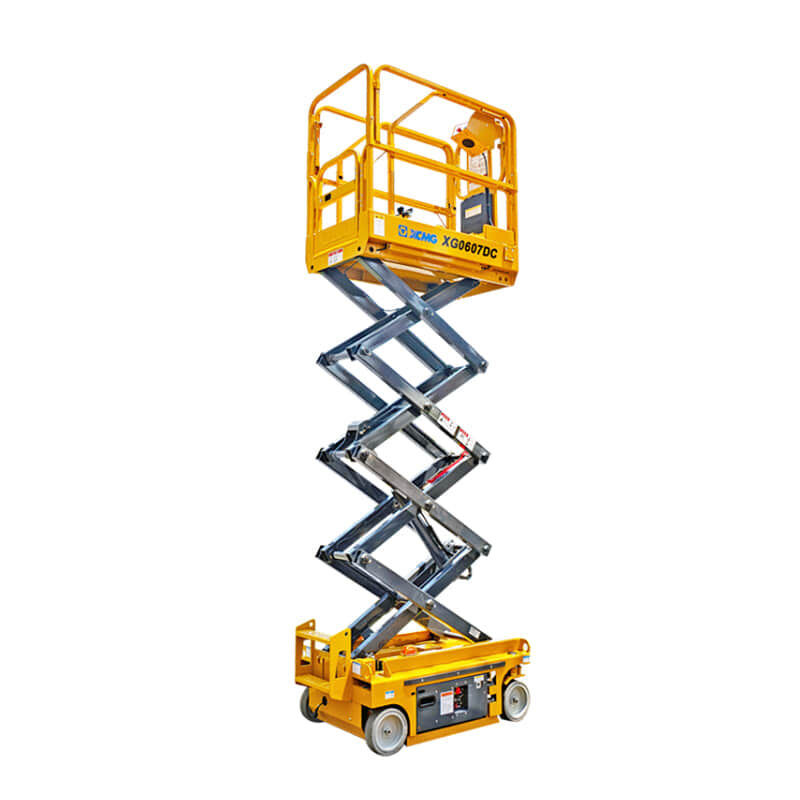
As a mechanical designer who has been deeply involved in the development and improvement of boom elevated work platforms, I understand the crucial role they play in various industries. These platforms are widely used in construction, maintenance, and many other fields where working at heights is a necessity. The ability to reach significant heights and access hard-to-reach areas makes the boom elevated work platform an indispensable tool. However, to truly make the most of it and maximize its efficiency, there are several aspects that need to be considered carefully. In this article, I'll share insights from a design perspective on how to achieve this goal, covering its unique features, the manufacturing advantages that contribute to its performance, and how all these elements work together to boost efficiency.
Key Features of Boom Elevated Work Platforms
The primary advantage of a boom elevated work platform lies in its remarkable reach. The extendable boom allows it to access areas that are far from the base, whether it's the upper corners of a tall building, the top of a large industrial structure, or the high sections of a bridge. This extended reach gives workers the ability to perform tasks such as painting, inspection, and repairs in locations that would otherwise be extremely difficult or impossible to reach. For example, in the construction of a skyscraper, boom elevated work platforms can be positioned on the ground level and then extend their booms upwards to reach the uppermost floors, enabling workers to install exterior glass panels or carry out facade maintenance with ease.
Flexibility of movement is another critical aspect. Boom elevated work platforms can not only move vertically but also horizontally and even rotate to some extent. This multi-directional movement capability enables precise positioning over the work area. Operators can adjust the position of the platform in three dimensions, which is essential for tasks that require accuracy, like electrical wiring installation or delicate equipment repair. In a maintenance job on a power transmission tower, the ability to rotate the boom and move the platform horizontally allows workers to get close to different parts of the tower without having to reposition the entire machine from the ground constantly.
Load-carrying capacity is also a significant feature. They are designed to support not only the weight of the workers but also the tools, materials, and sometimes additional equipment needed for the job. Different models have varying load capacities, but many can handle substantial weights, ensuring that everything required for the task can be brought up to the working height at once. This means fewer trips up and down to fetch tools or materials, saving valuable time during the work process. For instance, when installing a large ventilation system on a factory roof, a boom elevated work platform with a sufficient load capacity can carry all the ducts, fasteners, and power tools, allowing the installation to proceed smoothly.
Stability is a carefully engineered attribute. Despite its ability to extend and move in different directions, it maintains a stable working platform at height. This is achieved through a combination of a sturdy base, well-designed hydraulic or mechanical systems that control the movement and extension of the boom, and proper weight distribution. In windy conditions or when working on uneven ground, the platform's stability mechanisms come into play to ensure the safety of the operators and the smooth progress of the work. For example, on a construction site with a sloping terrain, the boom elevated work platform can adjust its stance and utilize its stability features to provide a level working surface.
Ease of operation is another notable feature. The control systems of boom elevated work platforms are designed to be intuitive and user-friendly. Operators can quickly learn how to manipulate the boom's extension, movement, and elevation with simple controls, usually in the form of joysticks or touch panels. This simplicity allows for efficient operation, reducing the learning curve for new users and enabling experienced operators to work with maximum productivity. In a busy maintenance project where time is of the essence, an operator can easily position the boom elevated work platform exactly where it's needed without wasting time on complicated controls.
Manufacturing Advantages of Boom Elevated Work Platforms
The manufacturing process of boom elevated work platforms incorporates several elements that enhance their efficiency.
High-quality materials are used in their construction to ensure durability and reliability. The booms themselves are often made from strong yet lightweight alloys that can withstand the forces exerted during extension and movement while keeping the overall weight of the platform manageable. The base and structural components are typically constructed from thick steel plates that provide a solid foundation and can support the weight and movements of the boom.
Advanced manufacturing techniques are employed to produce precise and reliable components. For example, computer numerical control (CNC) machining is used to fabricate parts with tight tolerances, ensuring that the boom's joints and moving parts fit together seamlessly. This precision manufacturing reduces friction and wear, allowing for smoother operation and longer service life of the boom elevated work platform. Welding processes are also carefully controlled to create strong and durable connections between different components, further enhancing the structural integrity of the platform.
The hydraulic systems are a critical part of their manufacturing advantage. These systems are designed to provide powerful and smooth actuation of the boom's movement and elevation. High-pressure hydraulic pumps are selected to generate the necessary force to extend and retract the boom quickly and efficiently. The hydraulic cylinders are built with high-quality seals and precision-machined barrels to prevent leaks and ensure consistent performance. Additionally, the hydraulic fluid used is carefully formulated to maintain its properties under different temperature and operating conditions, enabling the platform to operate reliably in various environments.
Safety features are integrated from the very beginning of the manufacturing process. Overload protection systems are installed to prevent the platform from being overloaded, which could lead to structural damage or instability. Tilt sensors are used to detect any abnormal inclination of the platform and automatically adjust or stop the operation to avoid accidents. Emergency stop buttons are strategically placed and easily accessible to allow operators to quickly halt the platform in case of an emergency. These safety measures not only protect the operators but also contribute to the overall efficiency by reducing the risk of downtime due to accidents or equipment failures.
The modular design is another manufacturing advantage. Key components such as the boom sections, hydraulic pumps, and motors can be easily replaced or upgraded if needed. This modularity simplifies maintenance and repair work, as technicians can quickly identify and replace faulty parts without having to disassemble the entire platform. It also allows for customization and upgrades over time, enabling the platform to adapt to new work requirements and maintain its efficiency throughout its service life.
Conclusion
In conclusion, as a mechanical designer, I recognize that maximizing efficiency with a boom elevated work platform involves a combination of understanding its key features and leveraging its manufacturing advantages. The unique features like extended reach, flexible movement, good load-carrying capacity, stability, and ease of operation make it a powerful tool for working at heights. The manufacturing aspects, including high-quality materials, advanced techniques, reliable hydraulic systems, integrated safety features, and modular design, ensure that the platform performs optimally and remains efficient over time.
By carefully considering these elements and ensuring that the boom elevated work platform is properly selected, maintained, and operated according to its design specifications, users can truly make the most of this valuable equipment. Whether it's in the construction industry for building skyscrapers, in the maintenance sector for servicing industrial facilities, or in other applications where working at heights is essential, the boom elevated work platform has the potential to significantly enhance productivity and efficiency, making it an investment well worth making.