
 EN
EN
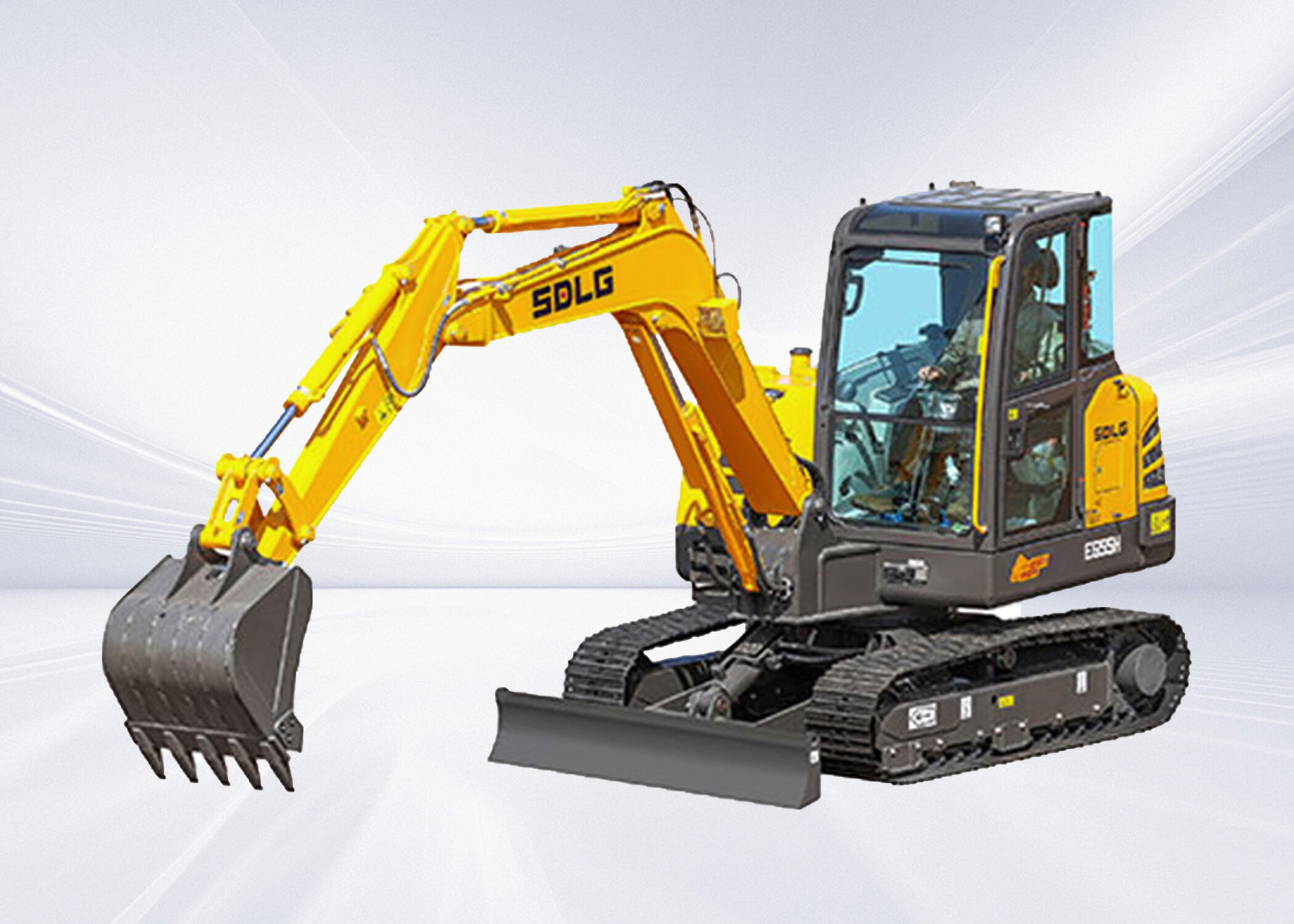
Case Overview
As a project consultant supporting contractors across utilities, municipal works, and light civil construction, I was engaged to diagnose recurring delays on a multi-site redevelopment program. The scope covered trenching for new water mains, footings for modular buildings, and selective demolition around active facilities. Early audits showed the equipment mix was either too small to meet cycle-time targets or too large to move and set up quickly in constrained spaces. That gap is precisely where a 5 ton excavator should excel, so we structured a customer success pilot around standardizing on the 5 ton excavator class.
The hypothesis was straightforward: a 5 ton excavator offers enough breakout force and reach for mid-size tasks, while remaining compact for urban access and rapid redeployment. Yet past projects suffered from downtime linked to short service intervals and fragmented spare parts sourcing. To validate improvement, we defined a baseline of key performance indicators—productive hours/day, average cycle time per trench meter, number of unplanned stops, and mean time to repair—then deployed a dedicated 5 ton excavator with telematics enabled for objective tracking.
Job sites presented typical mid-size challenges: alternating soil conditions, intermittent traffic control, and tight setbacks from utilities. The 5 ton excavator was outfitted with a quick coupler, two trench buckets, a grading bucket, and an auger, enabling rapid changeovers between tasks without a separate support machine. In parallel, we aligned maintenance planning to the machine’s extended service schedule to test whether a 5 ton excavator could sustain longer operating windows between stops.
Success criteria were jointly agreed with the client’s PMO: reduce unplanned downtime by 20%, compress cycle times by 10–15%, and simplify purchasing by consolidating common parts. If the 5 ton excavator met those targets while staying within transport and noise constraints, the customer would scale the approach across districts. The stage was set to prove that a well-specified 5 ton excavator could remove friction from mid-size projects and deliver predictable results.
Customer Requirements
Stakeholder interviews clarified three non-negotiables. First, uptime: crews needed longer maintenance cycles to keep the machine in the cut instead of the workshop. The team wanted a 5 ton excavator that could run full shifts between service windows, backed by predictive alerts rather than hard calendar stops. Second, procurement simplicity: the fleet manager needed high parts commonality so a 5 ton excavator could share filters, seals, and wear items with sister units, enabling bulk buys and faster turns from inventory. Third, versatility: one 5 ton excavator should transition from utility trenching to site prep to landscaping without bottlenecking the schedule.
Operationally, the client sought a transport-friendly footprint: a 5 ton excavator that could move on a standard trailer behind a medium truck, minimizing permit requirements and mobilization cost. They also emphasized operator familiarity—controls and displays had to be consistent with the rest of the fleet so experienced hands could jump into a 5 ton excavator with minimal retraining.
Financially, the CFO wanted total cost of ownership clarity. That meant quantifying how a 5 ton excavator would lower unplanned downtime, reduce expedited parts orders, and increase attachment utilization. Reporting had to be credible: the 5 ton excavator would transmit telematics on fuel burn, idle ratio, and service codes to build an evidence-based ROI.
Finally, sustainability and neighborhood impact mattered. The customer preferred a 5 ton excavator that could support low-noise modes during early/late shifts and maintain precise control near live utilities. The guiding question: could a single 5 ton excavator platform satisfy mid-size productivity targets while simplifying purchasing and reducing operational risk?
Applying Product Features to the Solution
Extended maintenance cycles: engineered uptime
We synchronized field operations to the machine’s longer service intervals and used telematics to trigger condition-based tasks. Daily checks remained mandatory, but fluids and filters were aligned to extended windows to keep the 5 ton excavator in production. Result: fewer planned stops, more contiguous work blocks, and better crew rhythm. Because the 5 ton excavator stayed on task longer, foremen combined trenching and backfill in a single mobilization instead of splitting across days. The extended cycle also reduced the number of technician dispatches, which historically idled the 5 ton excavator waiting for service.
To guard against risk, we set alert thresholds for temps and differential pressures so the 5 ton excavator could “self-advise” before a minor condition escalated. Operators acknowledged alerts from the cab, and the shop pre-staged parts overnight. This light-weight predictive loop kept the 5 ton excavator available without compromising reliability.
High parts commonality: procurement without friction
We mapped the consumables and wear items across the client’s small and mid-range units and migrated to a harmonized bill of materials. With a common filter family, standardized quick-coupler pins, and shared hose specs, the 5 ton excavator drew from the same shelf stock as sister machines. That let procurement place quarterly bulk orders, cut lead times, and trim rush freight. Field supervisors carried a compact kit—o-rings, hoses, teeth—that fit both the 5 ton excavator and the 3–6-ton neighbors. When a tooth wore out at 3 p.m., the crew swapped it in minutes and kept the 5 ton excavator digging instead of waiting on delivery.
Parts commonality also simplified training: techs learned one bleeding procedure, one diagnostic flow, and one torque chart covering multiple models. The upshot was faster mean time to repair for the 5 ton excavator and fewer stockouts.
Multi-industry capability: one platform, many tasks
We structured a week-in-the-life plan to prove versatility. Monday–Tuesday, the 5 ton excavator handled water service laterals—narrow trench, precise depth, spoils management. Wednesday, it shifted to pad prep, using the grading bucket and laser reference to hit tolerances. Thursday, landscaping: setting boulders and shaping swales. Friday, street-opening repairs in a tight corridor. Across these changes, the 5 ton excavator leveraged quick attachment swaps to avoid idle time. Operators praised the responsive hydraulics for finesse near buried assets; the 5 ton excavator’s geometry delivered the reach needed without crowding traffic.
Because schedules change, we also tested utility contingency work after a storm. The 5 ton excavator cleared downed limbs with a thumb, pulled compromised fence posts, and cut a relief trench to divert standing water. The same 5 ton excavator then returned to production digging the next morning—no special equipment call-outs required.
Results inside the solution window
By week three, the crew naturally sequenced around what the 5 ton excavator could do in one setup: trench, place bedding, backfill, and rough grade. Fewer moves meant fewer risk moments and better public coordination. With extended maintenance, the 5 ton excavator supported longer continuous runs, which smoothed trucking and inspection schedules. With shared parts, the 5 ton excavator never sat for want of a simple component. And with broad task coverage, the 5 ton excavator eliminated the “Swiss cheese” calendar gaps that often plague mid-size projects.
Outcomes and Recommendations
Quantitatively, the client realized fewer stoppages, faster cycles, and tighter purchasing control. Unplanned downtime events dropped substantially because the 5 ton excavator ran on extended service logic and alerted the shop before issues matured. Cycle times improved as the 5 ton excavator completed multi-step tasks per setup, and attachment swaps turned in minutes. Procurement reported lower expedited orders thanks to common parts that fit the 5 ton excavator and adjacent models. The field team’s feedback was consistent: when the 5 ton excavator stays in the cut and the parts shelf is unified, work flows.
Qualitatively, project managers highlighted calmer schedules and clearer communications with inspectors and neighbors. The 5 ton excavator’s mid-class footprint fit urban pads without special escorts, while its capability matched production expectations. Operators rotated between machines without relearning controls, and the 5 ton excavator became the “default first call” when a site needed dependable productivity.
Recommendations for organizations tackling similar mid-size portfolios:
Standardize on a 5 ton excavator platform with extended maintenance intervals and telematics-driven alerts.
Rationalize inventory so the 5 ton excavator shares filters, hoses, teeth, and coupler hardware fleet-wide.
Build task libraries—utility, pad, landscape—so the 5 ton excavator can roll through multi-trade sequences with minimal moves.
Track KPIs weekly; let the 5 ton excavator data guide service timing, operator coaching, and attachment investments.
In short, the 5 ton excavator delivered the blend of uptime, procurement simplicity, and cross-industry capability the client needed. For mid-size projects where predictability is profit, a well-specified 5 ton excavator is not just versatile—it’s the backbone that keeps crews productive and schedules on-track.