
 EN
EN
Problem Background
Rough terrain presents unique challenges to construction, mining, and civil engineering operations. Sites with steep slopes, uneven ground, loose soil, rocks, and high moisture content often render conventional wheeled machinery inefficient or unsafe. From a technical support perspective, operators frequently report equipment stalling, excessive vibration, or premature wear on machines not specifically engineered for these conditions. The combination of ground instability, high load cycles, and environmental exposure makes equipment reliability the highest priority for project managers and procurement teams.
Tracked bulldozers have long been recognized as the machinery of choice for such environments, but the reasons extend beyond basic traction. The physics of rough terrain—shear forces on soil, impact from debris, and torsional stresses on the chassis—demands a machine with a durable drivetrain, adaptable blade geometry, and robust sealing systems to prevent operational failures. Without these engineering features, projects risk costly downtime, lost labor productivity, and safety incidents.
Technical support teams are often called in when tracked machines encounter unexpected obstacles or perform below expectations. These interventions provide insights into common challenges: undercarriage wear from abrasive soils, hydraulic overload when pushing irregular material, and electrical faults in wet conditions. These recurring issues underscore the need for tracked bulldozers with a design focus on both performance and maintainability.
Ultimately, understanding the operational environment is crucial. Rough terrain work requires machines that can maintain traction on slopes, resist torsional stress when navigating uneven benches, and protect critical systems from moisture, dust, and debris. From a support standpoint, ensuring these capabilities in a tracked bulldozer reduces field service calls, extends component life, and guarantees that project schedules remain on track. The problem background sets the stage for why tracked bulldozers with multi-angle blade adjustment, impact-resistant drivetrains, and fully sealed waterproof electrical systems are not just desirable—they are essential.
Product Features
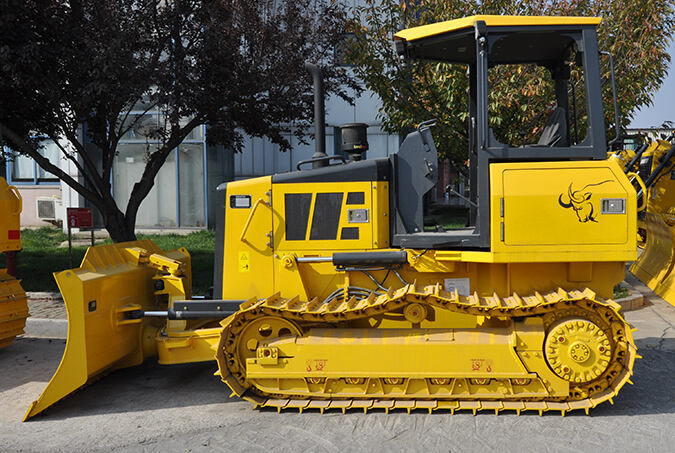
The tracked bulldozer’s design incorporates several engineering solutions that make it ideal for rough terrain operations. Among the most significant are multi-angle blade adjustment, impact-resistant drivetrain components, and high-sealing waterproof electrical systems.
Multi-Angle Blade Adjustment
Modern tracked bulldozers feature hydraulic or electro-hydraulic blade control that allows operators to modify blade angle, pitch, and tilt. This flexibility ensures optimal material engagement across a variety of terrain types. Whether pushing loose soil, rocky aggregates, or wet clay, the blade maintains consistent contact and minimizes slippage. Adjustable blade angles also improve energy efficiency by reducing unnecessary drag, lowering fuel consumption per cubic meter moved, and maintaining higher productivity even on challenging gradients.
Impact-Resistant Drivetrain
The drivetrain is the mechanical heart of a tracked bulldozer. High torque, repetitive shock loads, and uneven terrain can damage gears, rollers, and final drives if not properly engineered. Tracked bulldozers designed for rough terrain use reinforced, impact-resistant drivetrains with heavy-duty gearing, shock-absorbing mounts, and high-strength track chains. These components absorb and distribute force, preventing localized failures and reducing maintenance frequency. From a technical support perspective, this reliability is critical, as drivetrain repairs on remote sites can be time-consuming and expensive.
High-Sealing Waterproof Electrical Systems
Rough terrain often exposes machinery to water, mud, and debris, all of which can compromise electrical systems. Advanced tracked bulldozers incorporate fully sealed, waterproof connectors, harnesses, and control modules. These measures prevent short circuits, sensor failures, and hydraulic-electrical integration errors. Reliable electrical systems also enable advanced monitoring features, such as blade position feedback, load sensing, and diagnostic reporting, which improve operational efficiency and safety.
Additional features include reinforced chassis for torsional stability, heavy-duty undercarriages with optimized track tension, and operator-centric cabs that reduce fatigue while enhancing visibility. Together, these design elements make tracked bulldozers uniquely suited to sustain high productivity and low downtime in challenging work environments.
Case Process
A recent technical support engagement highlights the importance of tracked bulldozer features in rough terrain. The project involved road construction through a mountainous region with steep inclines, loose rock, and seasonal water runoff. The operator initially deployed a conventional wheeled loader, which quickly experienced tire slippage and hydraulic strain. Project managers decided to switch to tracked bulldozers designed with multi-angle blade adjustment and reinforced drivetrains.
During deployment, the technical support team conducted a pre-operation inspection, verifying track tension, hydraulic pressure, and electrical system integrity. Each tracked bulldozer was calibrated so that blade angle and pitch could adapt dynamically to changing soil conditions. Operators were trained to utilize tilt and side-shift functions, improving material handling efficiency while reducing wear on undercarriage components.
Early on, one unit encountered unexpected boulder clusters embedded in clay. The multi-angle blade adjustment allowed operators to incrementally increase tilt and side-shift, efficiently displacing material without stalling the machine. The impact-resistant drivetrain absorbed shock loads without triggering fault codes, demonstrating its resilience. Meanwhile, the waterproof electrical system prevented sensor failures despite waterlogged soil and mud accumulation during a rainstorm, maintaining full control over blade position and hydraulic functions.
Throughout the project, technical support personnel monitored telematics data, focusing on vibration readings, hydraulic pressure, and track wear indicators. Predictive maintenance alerts allowed preventive interventions, such as roller lubrication and tension adjustment, avoiding unscheduled downtime. The tracked bulldozer fleet maintained a continuous work cycle, achieving higher throughput than originally planned and reducing project delays.
Operators reported lower fatigue levels due to ergonomically designed cabs and smoother blade control, which also contributed to safer operation on steep gradients. Post-operation analysis confirmed that multi-angle blade adjustment, combined with impact-resistant drivetrains and sealed electrical systems, directly correlated with improved operational efficiency and reduced maintenance interventions. This case demonstrated the value of engineering-focused design choices in challenging terrain and highlighted the tracked bulldozer as a reliable, high-performance solution.
Final Results
By the end of the project, tracked bulldozers had proven their superiority over conventional equipment for rough terrain applications. The combination of multi-angle blade adjustment, impact-resistant drivetrains, and fully sealed waterproof electrical systems allowed continuous operation despite challenging slopes, abrasive soils, and high moisture content.
Technical support data showed a significant reduction in component wear, with fewer hydraulic and drivetrain faults compared to previous projects using standard machines. Operators reported improved control, less fatigue, and higher confidence in performing complex grading tasks. The telemetry system enabled proactive maintenance planning, keeping fleet uptime consistently high and avoiding costly emergency repairs.
Overall, tracked bulldozers delivered measurable productivity gains, reduced operational risks, and minimized downtime, validating their design for rough terrain work. From a technical support perspective, these machines not only met the demanding requirements of the project but also demonstrated lower lifecycle costs due to reduced maintenance frequency and extended component life.
In conclusion, tracked bulldozers are ideal for rough terrain because they combine advanced mechanical design, operator-centric features, and robust protection against environmental hazards. Projects employing these machines benefit from reliable performance, higher throughput, and reduced operational risk, making tracked bulldozers an essential asset in challenging construction and earthmoving environments.