
 EN
EN

The modern bulldozer has come a long way from the simple blade-and-track machines of the mid-twentieth century. Today, a bulldozer is no longer just a brute-force earthmoving tool — it is a precisely engineered, sensor-rich, and increasingly intelligent piece of heavy equipment that reflects decades of innovation in mechanical engineering, electronics, and data science. Understanding the latest technological advancements shaping bulldozer design is essential for construction managers, mining operators, and procurement professionals who want to make informed investment decisions and stay ahead in a competitive industry.
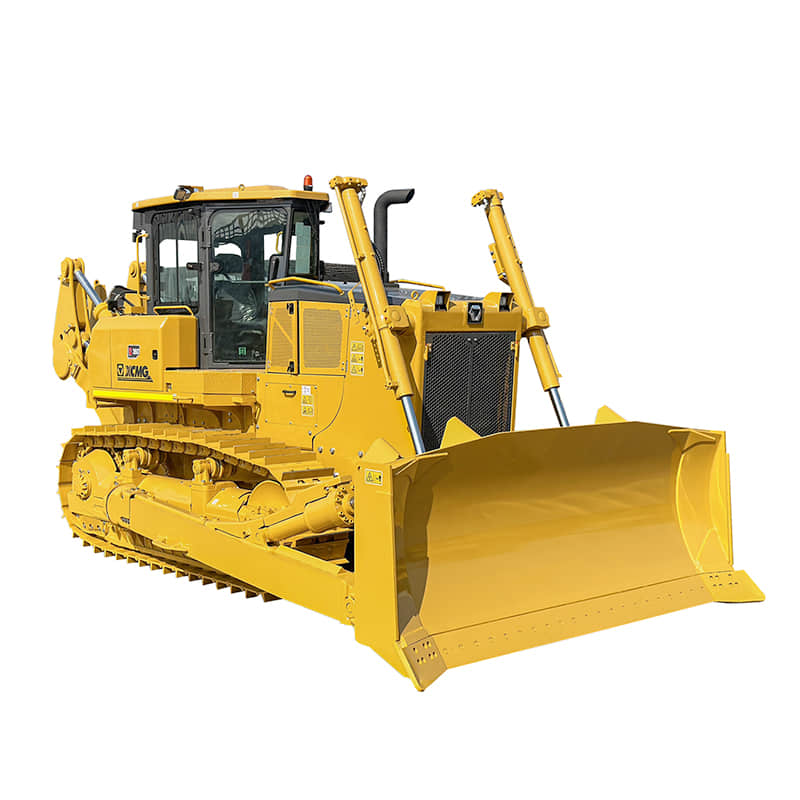
From GPS-assisted grading systems to hybrid powertrains and fully automated control architectures, the bulldozer is experiencing one of the most transformative periods in its engineering history. These advancements are not cosmetic improvements — they fundamentally change how a bulldozer performs, how long it lasts, how efficiently it consumes fuel, and how safely it can be operated in hazardous environments. This article examines the key technological frontiers that are redefining what a bulldozer can do and why these developments matter to real-world operators and buyers.
Intelligent Grade Control and Machine Guidance Systems
GPS and GNSS Integration in Modern Bulldozer Design
One of the most impactful recent advancements in bulldozer technology is the integration of GPS and Global Navigation Satellite System (GNSS) positioning directly into the machine's blade control system. Earlier generations of bulldozer operators relied entirely on manual skill and physical grade stakes to achieve accurate cut-and-fill results. Today, a bulldozer equipped with a 3D machine control system receives real-time position data from satellites and compares it against a pre-loaded digital terrain model, automatically adjusting the blade to match the target grade.
This technology significantly reduces rework cycles on large earthmoving projects. When a bulldozer can read and respond to a digital site plan autonomously, operators achieve specified tolerances much faster and with fewer passes. The reduction in over-excavation alone can translate into measurable material savings and project schedule compression. For mining sites and civil infrastructure projects where volume accuracy is critical, GPS-enabled bulldozer control has become a near-standard expectation among experienced contractors.
Modern systems go beyond simple blade height correction. They also account for cross-slope, machine pitch, and roll compensation, ensuring that the bulldozer maintains grade precision even on uneven or dynamically shifting terrain. This multi-axis awareness makes the technology genuinely useful in complex real-world conditions rather than only on ideal flat surfaces.
Laser and Total Station Guidance for Precision Finishing
In applications where satellite signal quality may be compromised — such as deep cut sites, urban canyons, or underground work — bulldozer design has evolved to support laser-based guidance and total station integration. These systems provide centimeter-level accuracy that surpasses what GNSS alone can deliver in challenging environments. A bulldozer fitted with laser receivers mounted on the blade can interpret signals from a rotating laser transmitter stationed on the job site, using that data to drive automatic blade corrections.
Total station systems take this further by using robotic survey instruments to track prisms mounted on the bulldozer in real time, feeding continuous positional corrections to the machine guidance software. This level of precision is particularly valuable in road base preparation, airport runway grading, and large pad construction where surface tolerances are tightly specified. The ability to switch between guidance modes — satellite, laser, or total station — depending on site conditions makes the contemporary bulldozer far more adaptable than any previous generation.
Powertrain Evolution and Fuel Efficiency Advancements
Tier 4 and Stage V Engine Compliance in Bulldozer Engineering
Emissions regulations have been a powerful driver of engine innovation in bulldozer design over the past decade. The adoption of Tier 4 Final standards in North America and equivalent Stage V standards in Europe has forced manufacturers to completely rethink combustion technology in every class of bulldozer. Modern bulldozers use advanced fuel injection systems, exhaust gas recirculation, diesel particulate filters, and selective catalytic reduction aftertreatment to meet these standards while maintaining or improving power output.
The result is a bulldozer that produces significantly less particulate matter and nitrogen oxide emissions than machines from even ten years ago, without sacrificing the high torque characteristics that earthmoving demands. In fact, many modern bulldozer engines deliver better fuel consumption per horsepower-hour than their pre-compliance predecessors, because the technologies required to meet emissions targets — particularly high-pressure common-rail injection — also improve combustion efficiency. For fleet operators, this means lower fuel bills and reduced carbon reporting obligations alongside regulatory compliance.
Hydrostatic and Hybrid Drive Systems
Traditional bulldozer powertrains used torque converter transmissions that, while durable, were not particularly efficient in the low-speed, high-load duty cycles typical of dozing work. The advancement of hydrostatic drive systems has changed this dynamic considerably. In a hydrostatic bulldozer, hydraulic pumps and motors replace conventional mechanical transmission components, allowing infinitely variable speed control and more precise management of tractive effort across the full working range.
This translates directly into improved pushing performance at low ground speeds — exactly the condition where a bulldozer spends most of its productive time. Hydrostatic systems also allow electronic control units to manage power split between the engine and drive system dynamically, recovering energy during coasting and redistributing it where needed. Some advanced bulldozer designs are beginning to incorporate hybrid electric assist systems that capture energy during certain operating phases and deploy it during high-demand pushes, reducing peak fuel consumption without reducing productivity.
These drivetrain innovations extend beyond fuel savings. Hydrostatic and hybrid systems typically reduce mechanical shock loads on undercarriage components, which is one of the highest maintenance cost areas in bulldozer operation. Smoother power delivery means longer track and roller life, contributing to lower total cost of ownership over the machine's service life.
Undercarriage and Structural Innovations
Heavy-Duty Undercarriage Design for Extended Service Life
The undercarriage of a bulldozer accounts for a substantial portion of both initial machine cost and lifetime maintenance expense. Recent advancements in undercarriage engineering focus on materials science, seal technology, and lubrication system design to dramatically extend service intervals and component life. High-carbon steel alloys treated with advanced heat processes now provide track links and bushings with significantly greater hardness and wear resistance than earlier materials.
Sealed and lubricated track systems have become standard on production bulldozers in the medium and heavy classes. These designs use precision-engineered seals to retain grease inside the pin-bushing interface throughout the track's working life, dramatically reducing metal-on-metal wear in the most abrasive environments. For a bulldozer working in rocky or abrasive soil conditions, this advancement can double or triple the interval between bushing turns or undercarriage replacements, which represents a significant operational cost reduction.
Blade Geometry and Material Advancements
The cutting blade is where a bulldozer does its primary work, and blade design has seen meaningful advancement in recent years. Variable-pitch blade systems allow operators to electronically adjust blade angle and tilt during operation, optimizing the blade's cutting geometry for different materials and tasks without stopping the machine. This flexibility makes a single bulldozer far more productive across the range of materials encountered on a typical site — from soft topsoil to consolidated clay to fractured rock.
Cutting edges and end bits made from boron steel alloys and high-chrome iron casting compounds now offer significantly longer wear life than conventional mild steel. Some bulldozer manufacturers have introduced segmented cutting edge designs that allow individual worn sections to be replaced without removing the entire blade assembly, reducing downtime and parts cost. These structural and material improvements compound with machine guidance systems to produce a bulldozer that both moves material more precisely and maintains that capability for longer between maintenance interventions.
Operator Comfort, Safety Technology, and Remote Operation
Advanced Cab Design and Ergonomic Controls
Operator performance is directly linked to fatigue, and modern bulldozer cab design takes this relationship seriously. Contemporary bulldozer cabs use viscous mounting systems to isolate the operator from track and powertrain vibration, reducing cumulative whole-body vibration exposure over a full shift. ROPS and FOPS certified structures are now standard, and many heavy bulldozer models incorporate pressurized and filtered cab environments to reduce dust and airborne particulate exposure in mining and quarrying applications.
Electronic joystick controls have largely replaced traditional lever-and-pedal arrangements in modern bulldozer design. These systems use electro-hydraulic pilot controls that require minimal physical effort while providing precise, responsive blade and ripper control. Programmable control mapping allows operators to customize joystick response curves and button assignments to match individual preferences or specific task requirements. The reduction in physical exertion required to operate a modern bulldozer directly reduces operator fatigue during long shifts, which has measurable safety and productivity implications.
Collision Avoidance, Telematics, and Remote Control Technology
Safety technology in bulldozer design now extends well beyond passive structural protection. Object detection systems using radar, ultrasonic sensors, and camera arrays monitor the immediate surroundings of the bulldozer during operation, alerting the operator to obstacles or personnel in the machine's path. Some systems can apply automatic blade corrections or reduce ground speed when a hazard is detected, providing an active safety layer beyond operator awareness alone.
Telematics systems are now embedded in virtually every new bulldozer sold into professional markets. These platforms transmit real-time machine data — including fuel consumption, idle time, fault codes, hydraulic temperature, and location — to fleet management portals accessible from any web-connected device. This data-driven approach to bulldozer fleet management allows operators and service teams to identify underperforming machines, schedule preventive maintenance before failures occur, and optimize fuel consumption across large equipment fleets.
Perhaps the most forward-looking advancement in bulldozer technology is the development of remote control and semi-autonomous operation capability. Remote-controlled bulldozers allow operators to direct machine functions from a safe distance in hazardous environments — including unstable slopes, contaminated areas, and underground applications where direct operator presence carries unacceptable risk. Early commercial deployments have demonstrated that experienced remote operators can maintain productive output comparable to conventional operation while eliminating direct exposure to site hazards. As sensor technology and communication bandwidth improve, the transition toward increasingly autonomous bulldozer operation is expected to accelerate.
Data Integration and Fleet Intelligence
Machine Learning and Predictive Maintenance in Bulldozer Operations
The integration of machine learning algorithms into bulldozer telematics platforms represents the cutting edge of design advancement in the current generation. By analyzing patterns in sensor data collected from large fleets over extended operating periods, predictive maintenance systems can identify early indicators of component degradation — such as subtle changes in hydraulic pressure cycles, abnormal temperature profiles, or minute shifts in fuel consumption under known load conditions — before these issues escalate to failures or unplanned downtime.
For a bulldozer operating in a remote mining or infrastructure project, unplanned downtime is extremely costly. Parts logistics, technician mobilization, and lost production time can quickly dwarf the cost of the failed component itself. Predictive maintenance systems that can flag a developing hydraulic pump issue two weeks before failure give operators the window they need to source parts, schedule a maintenance window, and avoid the cascading schedule impacts of an unexpected breakdown. This capability represents a fundamental shift in how bulldozer maintenance is managed — from reactive repair to proactive management.
Site Connectivity and Digital Twin Integration
Modern construction and mining projects increasingly operate as digitally connected environments, and the bulldozer is becoming an active data node within those environments. Equipped with onboard sensors and communication systems, a bulldozer can continuously log cut and fill volumes, track actual progress against the digital site model, and transmit this data to project management platforms where it is visualized as real-time progress maps.
This integration supports the concept of a digital twin for the job site — a continuously updated virtual representation of the site's actual state that can be compared against the design model to identify deviations early. When a bulldozer's machine guidance system and telematics platform feed data into this digital twin, project managers gain visibility into earthwork progress that previously required manual surveying and days of data processing. The bulldozer becomes not just a production tool but an active contributor to project intelligence, supporting faster decision-making and tighter schedule management.
FAQ
What is the most significant recent advancement in bulldozer technology?
The integration of GPS and 3D machine control systems is widely considered the most impactful recent advancement in bulldozer technology. These systems allow a bulldozer to automatically maintain specified grades without constant manual blade corrections, reducing rework, improving accuracy, and significantly increasing productivity on large earthmoving and grading operations.
How do modern bulldozer engines differ from older designs?
Modern bulldozer engines must comply with Tier 4 Final or Stage V emissions standards, which has driven the adoption of high-pressure fuel injection, exhaust aftertreatment, and advanced combustion management. The result is a bulldozer that produces far fewer harmful emissions while also delivering improved fuel efficiency compared to pre-compliance engine designs from previous decades.
Can a bulldozer be operated remotely or autonomously?
Yes, remote control capability is a commercially available feature on a growing number of bulldozer models, particularly in the heavy and ultra-class segments. Remote-controlled bulldozers are used in hazardous environments such as unstable slopes, underground mining applications, and contaminated sites. Semi-autonomous functions, such as automatic blade control and GPS-guided grading, are already standard on many production models, with increasing autonomy expected as sensor and computing technology continues to develop.
How does telematics improve bulldozer fleet management?
Telematics systems embedded in a modern bulldozer continuously transmit operational data — including fuel consumption, idle time, fault codes, location, and component health metrics — to cloud-based fleet management platforms. This real-time visibility allows fleet managers to schedule preventive maintenance, reduce unnecessary idling, identify underperforming machines, and respond rapidly to developing mechanical issues before they result in costly unplanned downtime.