
 EN
EN
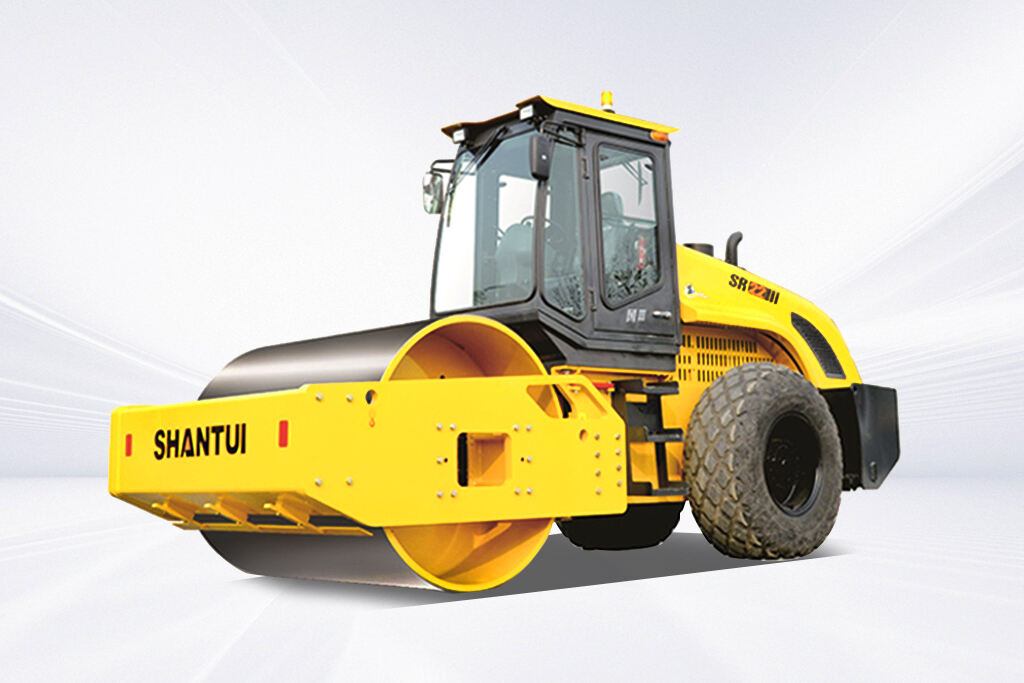
Soil stability forms the foundation of every successful construction project, and understanding how compaction equipment achieves this critical objective can determine the difference between a structure that endures and one that fails. The road roller stands as one of the most essential pieces of compaction equipment, utilizing specific mechanical principles to transform loose, unstable soil into a dense, load-bearing foundation that can support everything from residential buildings to major infrastructure projects.
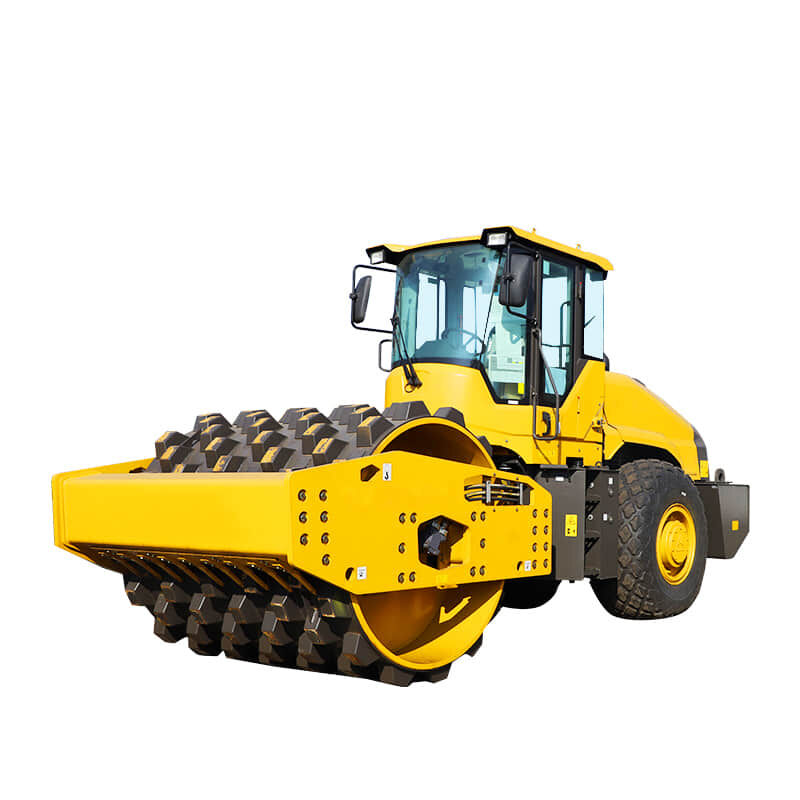
The process by which a road roller ensures soil stability involves multiple interconnected mechanisms that work together to eliminate air voids, increase particle contact, and create optimal soil density. Through controlled application of static weight, vibratory forces, and precise operational techniques, this compaction equipment transforms the physical properties of soil at the molecular level, creating the stable foundation that modern construction demands.
The Science Behind Road Roller Compaction
Static Force Application Principles
The fundamental mechanism through which a road roller ensures soil stability begins with the application of static force across the soil surface. When the heavy drum of a road roller moves across loose soil, it applies concentrated pressure that forces soil particles into closer contact with one another. This compression process reduces the volume of air spaces between particles, which directly increases the soil's density and load-bearing capacity.
The effectiveness of static compaction depends on several critical factors, including the weight of the road roller, the contact area of the drum, and the moisture content of the soil being compacted. Heavier road roller units can apply greater static force, but the relationship between weight and compaction effectiveness is not always linear. The distribution of this force across the drum's contact patch determines how efficiently the compaction energy transfers into the soil matrix.
Different soil types respond uniquely to static compaction forces applied by a road roller. Cohesive soils, such as clays, require different static pressure applications compared to granular soils like sands and gravels. The road roller operator must understand these soil-specific requirements to achieve optimal compaction results and ensure long-term soil stability.
Vibratory Compaction Mechanisms
Modern road roller equipment incorporates vibratory systems that significantly enhance the compaction process beyond what static weight alone can achieve. The vibratory mechanism generates controlled oscillations that penetrate deeper into the soil profile, breaking down particle bridges and allowing for more effective rearrangement of the soil structure. This dynamic compaction process enables the road roller to achieve superior soil stability compared to static compaction methods.
The frequency and amplitude of vibrations produced by a road roller must be carefully calibrated to match the specific soil conditions and project requirements. Higher frequencies typically work better for granular soils, while lower frequencies prove more effective for cohesive materials. The road roller's vibratory system creates a liquefaction effect in granular soils, temporarily reducing friction between particles and allowing them to settle into a more compact arrangement.
The depth of influence achieved by vibratory compaction from a road roller extends significantly beyond the immediate surface contact area. This deep penetration effect ensures that soil stability improvements occur throughout the entire lift thickness, creating uniform density and strength characteristics that contribute to overall foundation performance.
Soil Density Optimization Through Road Roller Operations
Achieving Target Density Requirements
Soil stability directly correlates with achieving specific density targets, and the road roller serves as the primary tool for reaching these critical benchmarks. Construction specifications typically require soil to reach a certain percentage of maximum dry density, often ranging from 95% to 98% depending on the application. The road roller's systematic compaction process incrementally increases soil density through multiple passes until these targets are achieved.
The number of passes required from a road roller varies significantly based on soil type, moisture content, and lift thickness. Each pass of the road roller contributes additional compactive effort, but the effectiveness of subsequent passes typically diminishes as the soil approaches its maximum achievable density. Understanding this relationship helps operators optimize their road roller operations for both efficiency and effectiveness.
Monitoring density achievement during road roller operations requires systematic testing and verification procedures. Field density testing methods, such as nuclear gauge testing or sand cone procedures, provide real-time feedback on compaction progress. This data allows operators to adjust their road roller techniques and ensure that soil stability requirements are consistently met across the entire project area.
Managing Moisture Content for Optimal Compaction
The relationship between soil moisture and road roller compaction effectiveness plays a crucial role in achieving soil stability objectives. Soil moisture acts as a lubricant between particles during compaction, reducing friction and allowing for more efficient rearrangement under the influence of the road roller's compactive forces. However, both excessive and insufficient moisture can significantly impair compaction effectiveness.
Optimal moisture content varies by soil type, but most soils achieve maximum compaction efficiency when moisture levels approach what engineers term 'optimum moisture content.' When operating a road roller on soil at optimum moisture, the compactive energy transfers most efficiently into density gains rather than being absorbed by excessive moisture or hindered by insufficient lubrication between particles.
Road roller operators must recognize the visual and operational indicators of proper soil moisture conditions. Soil that is too wet will exhibit rutting, pumping, or excessive deformation under the road roller, while overly dry soil may resist compaction and fail to achieve adequate density despite multiple passes. Adjusting moisture content through water addition or drying time allows the road roller to function at peak efficiency.
Eliminating Air Voids and Achieving Particle Interlocking
Understanding Air Void Reduction
Air voids within soil represent weak points that compromise overall soil stability, and the road roller's primary function involves systematically eliminating these voids through controlled compaction pressure. When soil contains excessive air voids, it lacks the particle-to-particle contact necessary to develop significant bearing strength. The road roller's weight and vibratory action force air out of the soil matrix while simultaneously bringing particles into direct contact.
The process of air void elimination through road roller compaction occurs gradually over multiple equipment passes. Initial passes of the road roller primarily affect surface and near-surface air voids, while subsequent passes influence progressively deeper zones within the compaction lift. This systematic approach ensures uniform air void reduction throughout the entire soil profile.
Measuring air void content provides direct insight into road roller compaction effectiveness and soil stability achievement. Laboratory testing of compacted soil samples can determine void ratios and porosity values, which directly correlate with engineering properties such as bearing capacity, permeability, and settlement characteristics. Effective road roller operations should consistently reduce air void content to levels that support the intended structural loads.
Creating Effective Particle Interlocking
Beyond simple density increases, the road roller facilitates the development of particle interlocking mechanisms that significantly enhance soil stability. As the road roller applies compactive forces, angular particles rearrange themselves into positions where their irregular surfaces mesh together, creating mechanical interlocking that resists future movement under load. This interlocking effect contributes substantially to the overall strength development in compacted soils.
The effectiveness of particle interlocking achieved through road roller compaction depends heavily on particle shape, size distribution, and gradation characteristics. Well-graded soils with angular particles typically develop superior interlocking compared to uniformly graded or rounded particle soils. The road roller's vibratory action helps particles find optimal interlocking positions that might not be achievable through static loading alone.
Sustained particle interlocking requires that the road roller achieve sufficient compactive energy to overcome the initial loose arrangement of particles without applying so much force that particle crushing occurs. Excessive compaction pressure from an oversized road roller can actually damage particle interlocking by breaking down aggregate particles or creating localized overstressing that reduces long-term stability.
Quality Control and Performance Verification
Field Testing Protocols for Compaction Verification
Verifying that road roller operations have successfully achieved soil stability requires systematic field testing protocols that can accurately measure compaction results. Standard penetration testing, plate load testing, and in-situ density measurement provide quantitative data on soil response to road roller compaction efforts. These testing procedures verify whether the compacted soil meets the engineering requirements for the intended application.
Nuclear density gauge testing represents one of the most common methods for verifying road roller compaction effectiveness in real-time. This testing approach provides immediate feedback on both wet density and moisture content, allowing road roller operators to adjust their techniques during the compaction process rather than discovering deficiencies after completion. Regular testing throughout road roller operations ensures consistent quality control.
Dynamic cone penetration testing offers another valuable tool for assessing soil stability achieved through road roller compaction. This testing method evaluates soil resistance to penetration at various depths, providing insight into compaction uniformity and identifying any zones where the road roller may not have achieved adequate densification. Such testing helps optimize future road roller operations and ensures reliable soil performance.
Long-term Performance Monitoring
The ultimate measure of road roller effectiveness lies in the long-term performance of the compacted soil under service conditions. Settlement monitoring, bearing capacity verification, and stability assessments conducted over time provide feedback on whether the road roller compaction process successfully created lasting soil stability. This long-term data helps refine compaction specifications and road roller operation procedures for future projects.
Environmental factors such as freeze-thaw cycles, moisture variations, and loading history can affect the stability of soil compacted by road roller equipment. Understanding these influences helps engineers design compaction specifications that account for anticipated service conditions and ensure that road roller operations create soil stability that persists throughout the structure's design life.
Performance monitoring also reveals the relationship between specific road roller techniques and long-term soil behavior. Data collected from monitoring programs helps establish best practices for road roller operations in different soil types and environmental conditions, contributing to improved industry standards and more reliable compaction outcomes.
FAQ
What factors determine how many passes a road roller needs to achieve proper soil stability?
The number of road roller passes required depends on soil type, moisture content, lift thickness, and equipment specifications. Cohesive soils typically require more passes than granular materials, while thicker lifts need additional passes to achieve uniform compaction. Most projects require 4-8 passes of a road roller to reach target density, but field testing should verify actual requirements for each specific situation.
Can a road roller achieve adequate soil stability in all weather conditions?
Road roller effectiveness varies significantly with weather conditions, particularly temperature and moisture levels. Frozen soils cannot be properly compacted by a road roller, while excessively wet conditions can prevent adequate compaction and may cause soil disturbance. Optimal road roller operations occur when soil moisture content falls within the acceptable range for the specific soil type and ambient temperature supports proper soil behavior.
How does soil type affect the road roller compaction process and stability outcomes?
Different soil types respond uniquely to road roller compaction efforts. Granular soils like sands and gravels compact effectively under vibratory road roller action, while cohesive soils such as clays require careful moisture management and may benefit from static compaction techniques. The road roller operator must adjust frequency, amplitude, and speed settings based on soil characteristics to achieve optimal stability results.
What signs indicate that a road roller has successfully achieved proper soil stability?
Successful road roller compaction produces several observable indicators including uniform surface appearance, absence of rutting or pumping under equipment loads, consistent rebound characteristics across the compacted area, and achievement of specified density requirements through field testing. The compacted soil should also demonstrate appropriate stiffness and support the road roller's weight without excessive deformation during final passes.
Table of Contents
- The Science Behind Road Roller Compaction
- Soil Density Optimization Through Road Roller Operations
- Eliminating Air Voids and Achieving Particle Interlocking
- Quality Control and Performance Verification
-
FAQ
- What factors determine how many passes a road roller needs to achieve proper soil stability?
- Can a road roller achieve adequate soil stability in all weather conditions?
- How does soil type affect the road roller compaction process and stability outcomes?
- What signs indicate that a road roller has successfully achieved proper soil stability?