
 EN
EN
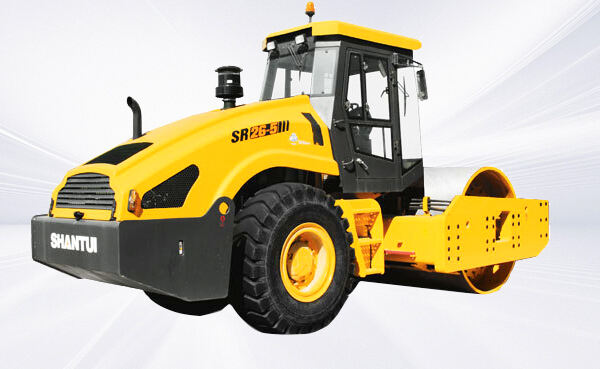
Understanding Modern Road Roller Technology in Curved Surface Compaction
The process of achieving uniform asphalt compaction on curved surfaces represents one of the most challenging aspects of road construction. Road roller compaction on curves requires precise control, advanced technology, and expert operation to ensure the resulting surface meets strict quality and safety standards. Modern road construction has evolved significantly, with specialized equipment and techniques developed specifically to address the unique challenges presented by curved sections of roadway.
The complexity of road roller compaction on curved surfaces stems from the different forces at play compared to straight sections. When a road roller operates on a curve, the outer edge of the drum travels a greater distance than the inner edge, potentially leading to uneven compression of the asphalt material. This fundamental challenge has driven innovations in both equipment design and operational techniques.
Essential Components of Modern Road Rollers
Advanced Drum Technology
Modern road roller drums incorporate sophisticated design elements that facilitate uniform compaction on curves. The drums feature variable frequency vibration systems that can be adjusted based on the curve radius and material requirements. These systems allow operators to maintain consistent material density even when dealing with complex geometric patterns in road construction.
The drum surface itself often includes specialized coatings and patterns that prevent material pickup while ensuring proper compression. This technology helps distribute the compaction force evenly across the width of the drum, which becomes particularly important when navigating curves where forces are naturally uneven.
Intelligent Control Systems
State-of-the-art road rollers employ sophisticated control systems that continuously monitor and adjust compaction parameters. These systems use sensors to measure material density, temperature, and roller speed, making automatic adjustments to ensure uniform compression. When operating on curves, these intelligent systems compensate for the differential speeds between the inner and outer edges of the drum.
The control systems also provide real-time feedback to operators, displaying critical data about compaction uniformity and material response. This information allows for immediate adjustments to achieve optimal results, particularly crucial when working on challenging curved sections.
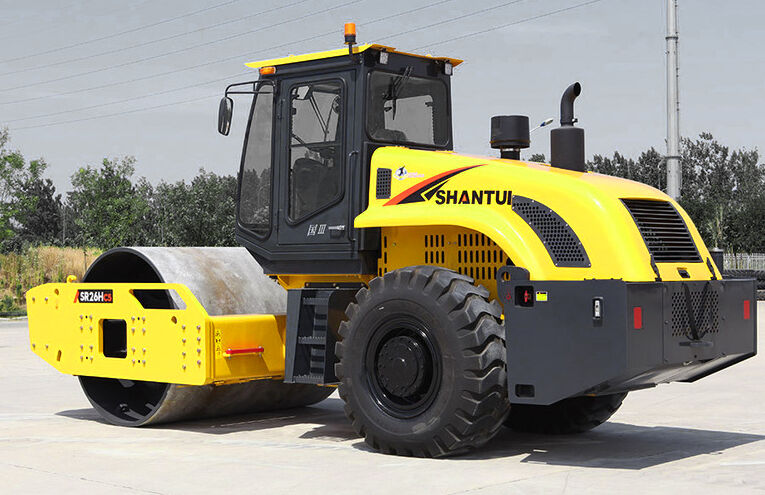
Operational Techniques for Curved Surface Compaction
Speed and Pattern Control
Successful road roller compaction on curves requires careful attention to operating speed and rolling patterns. Operators must maintain a consistent speed that allows proper material compression while avoiding displacement or shoving of the asphalt mix. The optimal speed varies depending on factors such as curve radius, material temperature, and environmental conditions.
Rolling patterns on curves differ from those used on straight sections. Operators typically begin at the lower edge of the curve, working their way up to the higher edge in a systematic pattern. This approach helps prevent material displacement and ensures even distribution of compactive force across the curved surface.
Temperature Management
Asphalt temperature plays a crucial role in achieving uniform compaction, particularly on curves where material behavior can be more challenging to control. Operators must carefully monitor and maintain appropriate temperature ranges throughout the compaction process. This often requires coordination with paving operations to ensure the material remains within the optimal temperature window for compaction.
Modern road rollers feature temperature monitoring systems that help operators track surface conditions in real-time. This capability is especially valuable when working on curves, where varying speeds and forces can affect material temperature differently across the width of the section.
Quality Control and Verification
Density Testing Methods
Ensuring uniform compaction on curves requires rigorous quality control measures. Modern density testing equipment allows for rapid assessment of material density across the curved surface. These tests help verify that the road roller compaction meets specified requirements and identifies any areas needing additional attention.
Continuous monitoring throughout the compaction process helps prevent issues that could lead to future pavement failures. Advanced testing methods can map the entire curved section, providing detailed data about density uniformity and identifying any potential weak spots requiring remediation.
Documentation and Analysis
Modern road construction projects maintain detailed records of compaction operations, particularly for curved sections where achieving uniformity presents greater challenges. This documentation includes data from intelligent compaction systems, density tests, and temperature monitoring, creating a comprehensive record of the construction process.
Analysis of this data helps improve future operations and provides valuable insights for training operators in the specific techniques required for successful curve compaction. The information also serves as important documentation for quality assurance and project compliance requirements.
Frequently Asked Questions
What special considerations are needed when compacting asphalt on steep curves?
When compacting asphalt on steep curves, operators must pay special attention to roller speed, pattern overlap, and material temperature. The combination of curve radius and slope requires careful control of the equipment to prevent material displacement and ensure uniform density. Additional passes may be necessary to achieve proper compaction while maintaining surface stability.
How do weather conditions affect road roller compaction on curves?
Weather conditions significantly impact the compaction process on curves. Temperature, wind, and humidity can affect how quickly the asphalt cools and how it responds to compression. Operators must adjust their techniques based on environmental conditions, potentially modifying rolling patterns or speed to maintain optimal compaction results.
What role does operator experience play in achieving uniform compaction on curves?
Operator experience is crucial for successful curve compaction. Skilled operators understand how to interpret equipment feedback, adjust rolling patterns, and maintain proper speed and overlap. Their expertise in reading material behavior and making appropriate adjustments helps ensure consistent results, particularly in challenging curved sections where multiple variables must be managed simultaneously.