
 EN
EN

The choice of blade configuration on a bulldozer directly influences how efficiently your earthmoving projects progress. Whether you're clearing land, grading surfaces, or moving material across a job site, the type of bulldozer blade you select will determine your productivity rate, fuel consumption, and overall operational cost. Understanding how different bulldozer blade designs function and their specific applications is essential for any construction manager or equipment operator looking to maximize work efficiency and project profitability.
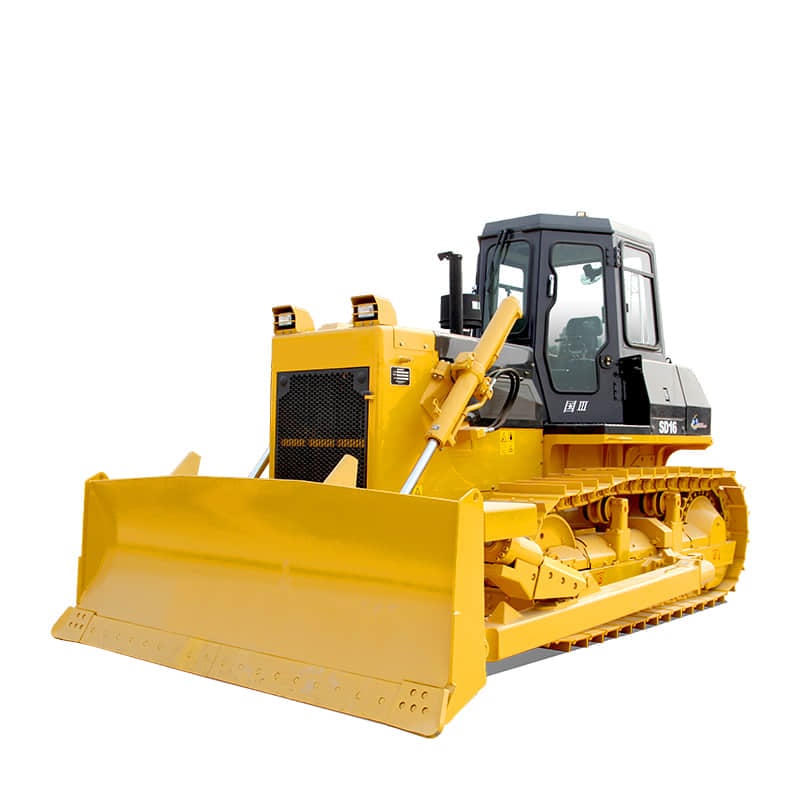
A bulldozer equipped with the right blade type becomes a more effective tool on the job site, reducing cycle times and minimizing wasted machine hours. Each bulldozer blade style offers distinct advantages depending on your specific earthmoving task, soil conditions, and site requirements. This article explores the major bulldozer blade types available today, how they affect your work efficiency, and the practical considerations you should evaluate when selecting the ideal configuration for your projects.
Standard Straight Blade Configuration
Bulldozer Blade Design and Functionality
The straight blade is the most common bulldozer configuration found on job sites worldwide. This bulldozer blade style features a rigid, rectangular blade mounted perpendicular to the machine's direction of travel. When a bulldozer operator engages the straight blade, material is pushed directly forward in a straight line, making this configuration ideal for pushing loose material like soil, sand, and gravel across relatively flat terrain. The simplicity of a straight bulldozer blade means fewer hydraulic connections and less mechanical complexity, which translates to lower maintenance costs and increased reliability on challenging job sites.
Efficiency Impact and Application Scenarios
Work efficiency with a standard bulldozer blade improves significantly when working with uniform material and consistent ground conditions. A bulldozer with a straight blade excels at long-distance pushing operations, where maximum forward force is required to move large volumes of material. The blade's rigid design means the bulldozer can maintain steady push pressure throughout the cycle, reducing the time needed to complete each pass. Construction teams commonly select a bulldozer with this blade type for land clearing, road base preparation, and general site development where straightforward material movement is the primary objective.
Angled Blade Performance Advantages
Directional Control and Blade Positioning
An angled bulldozer blade can rotate up to 45 degrees in either direction, allowing the bulldozer operator to direct material sideways rather than strictly forward. This bulldozer blade configuration provides superior directional control during grading and spreading operations. When a bulldozer's angled blade is positioned at an optimal angle, the machine can perform windrow spreading, side casting, and directional pushing with minimal repositioning. The hydraulic angle control on an angled bulldozer blade means operators can adjust blade position without moving the entire machine, significantly improving cycle efficiency on confined work sites.
Versatility and Production Metrics
The versatility of an angled bulldozer blade directly impacts your overall work efficiency because fewer separate passes are often required to complete the same task. A bulldozer equipped with an angled blade can grade a surface more smoothly by adjusting blade angle progressively across the work area, rather than making multiple full-width passes with a straight configuration. Production data from construction sites consistently shows that angled bulldozer blade operations reduce total cycle time by 15 to 25 percent compared to straight blade work for typical grading projects. Operators find that a bulldozer with angle control capability delivers better material distribution, particularly when spreading fill material or creating berms along site perimeters.
Semi-U and U-Blade Specialization
High-Volume Material Containment
Semi-U and U-shaped bulldozer blade designs feature curved side plates that wrap partially or fully around the material being pushed, creating a container that holds material more effectively during transport. This bulldozer blade style minimizes spillage along the sides during long-distance pushes, meaning less material is lost and more reaches the designated deposit point. A bulldozer equipped with a U-blade configuration can transport material much farther than straight or angled configurations because the sides prevent lateral material loss. The material containment advantage of this bulldozer blade type makes it particularly valuable on steep slopes, rough terrain, and operations where precise material placement is essential.
Productivity Gains and Operational Impact
The confined material within a U-shaped bulldozer blade means fewer cleanup passes and reduced scattered material requiring re-work. A bulldozer with this blade configuration experiences measurable productivity increases because operators complete material movement tasks in fewer total cycles. For large-scale earthmoving projects involving significant volume movements, a bulldozer with a U-blade can reduce overall project duration by 20 to 35 percent compared to standard configurations. Construction managers recognize that when a bulldozer's U-blade reduces material spillage, site cleanup becomes faster, and equipment downtime for sweeping and organizing material decreases substantially. Additionally, this bulldozer blade style proves especially efficient in finishing work and final grade establishment where material precision directly affects project quality.
Operational Considerations for Blade Selection
Site Conditions and Material Type
Selecting the appropriate bulldozer blade requires careful analysis of your specific job site conditions and material characteristics. Hard, rocky material may damage sensitive angled mechanisms, making a straight bulldozer blade more suitable despite potentially lower efficiency. A bulldozer operator working in extremely wet or cohesive soil conditions might find that an angled blade configuration provides better control and reduces machine stress compared to a heavily laden U-shaped bulldozer blade. Seasonal variations also affect bulldozer blade selection because frozen ground behaves differently than thawed soil, and your chosen blade type must accommodate these material changes without sacrificing equipment longevity.
Equipment Investment and Maintenance Strategy
The total cost of ownership for a bulldozer includes both initial acquisition cost and ongoing maintenance expenses, which vary significantly by blade type. A straight bulldozer blade offers the lowest maintenance burden due to its mechanical simplicity, while an angled or U-shaped bulldozer blade requires more sophisticated hydraulic systems and periodic adjustment mechanisms. Your fleet management team should evaluate whether the productivity gain from a specialized bulldozer blade configuration justifies the increased maintenance complexity and parts inventory. For contractors managing multiple bulldozer units across diverse job sites, maintaining standardized blade types on a bulldozer reduces spare parts requirements and allows operators to transfer between machines more easily.
FAQ
Which bulldozer blade type delivers the fastest material movement over long distances?
The straight bulldozer blade typically moves material the fastest over extended distances because its rigid design allows maximum pushing force without directional variance. However, a U-shaped bulldozer blade often achieves greater overall efficiency when considering material containment and reduced spillage losses. A bulldozer equipped with either configuration can achieve similar net material transport rates depending on terrain, but the straight configuration excels at raw pushing speed while the U-blade minimizes waste.
Can an operator switch between different bulldozer blade types easily?
Modern bulldozer designs support quick-change blade systems that allow attachment and detachment of different blade types without extensive re-rigging. However, switching a bulldozer blade configuration typically requires powering down the machine and making hydraulic adjustments, which takes 30 to 60 minutes depending on the equipment. Many construction companies maintain separate bulldozer units pre-configured with their most-used blade types to minimize transition time rather than frequently switching blade configurations on a single bulldozer machine.
How does blade type affect bulldozer fuel consumption and operating costs?
A straight bulldozer blade generally consumes less fuel per unit of material moved because the simple design reduces hydraulic strain and mechanical resistance. More complex blade types like angled or U-shaped configurations require additional hydraulic circulation and actuator movement, slightly increasing fuel consumption per hour. However, when calculating true operating cost per unit of material moved, specialized bulldozer blade types often prove more economical because they complete tasks in fewer cycles, offsetting higher hourly fuel consumption with dramatically faster cycle times.