
 EN
EN
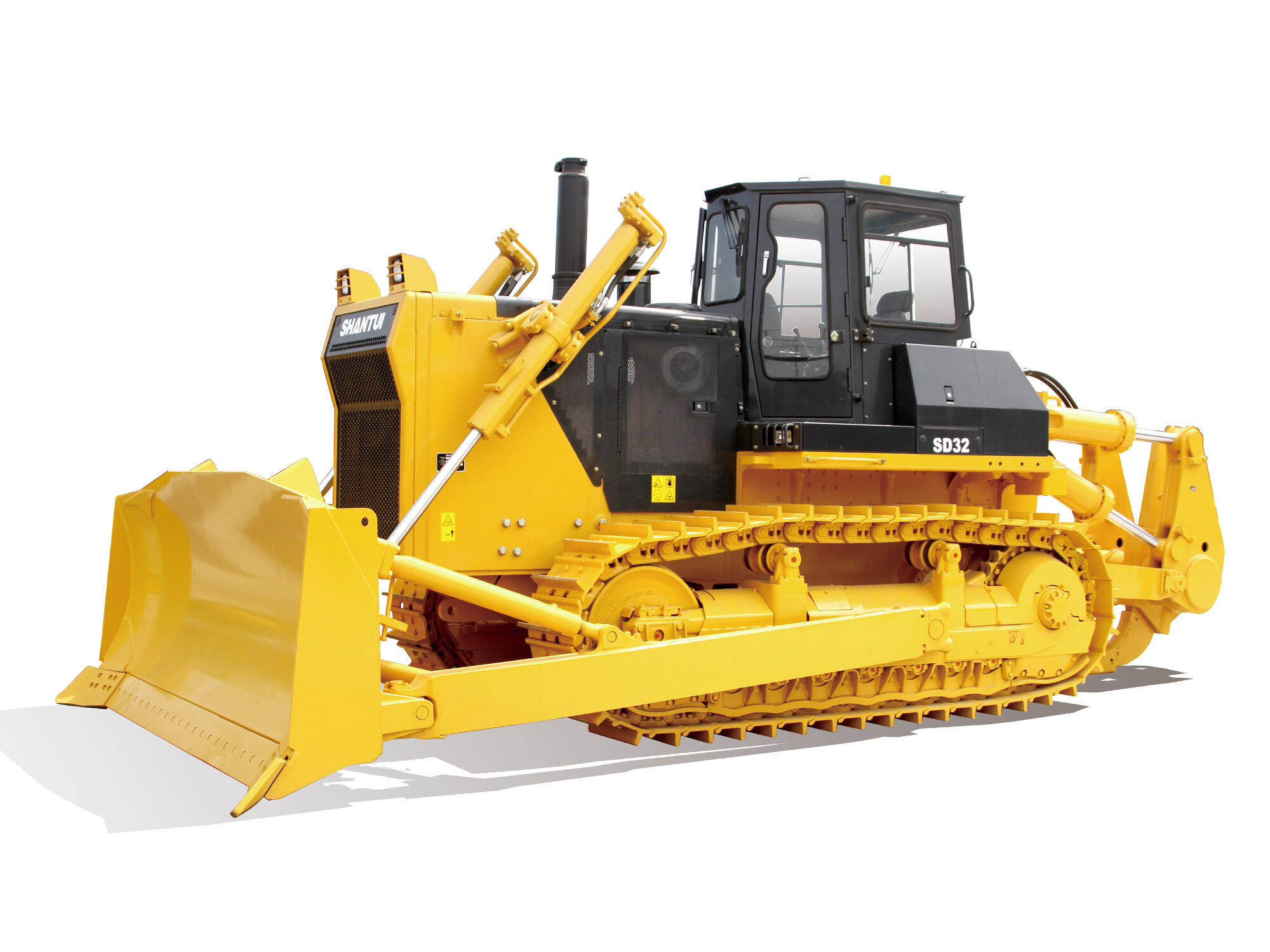
When it comes to earthmoving and land management, one of the most overlooked decisions is the choice of blade fitted to a bulldozer. While operators often focus on engine power, track configuration, or hydraulic systems, the blade is the primary working tool that directly contacts the material being moved. Choosing the wrong blade type can drastically reduce cycle times, strain the machine, and lead to costly rework. Understanding how each blade design interacts with different soil conditions, terrain types, and job requirements is fundamental to maximizing productivity on any construction or mining site.
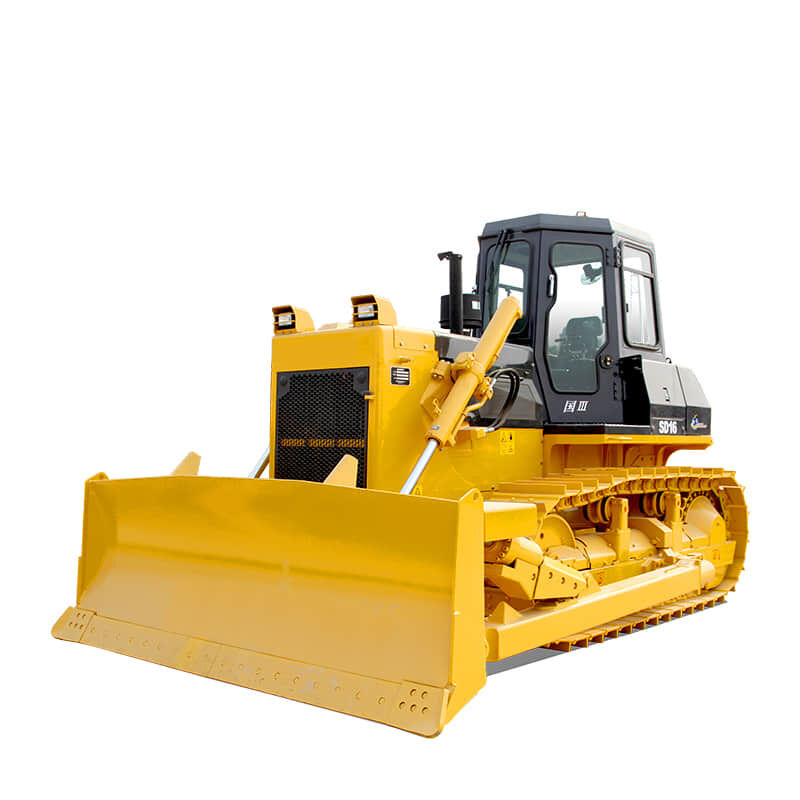
A bulldozer is essentially defined by the combination of its undercarriage power and its blade geometry. The blade determines how much material can be pushed in a single pass, how cleanly the surface is finished, and how well the machine handles obstacles. Industry professionals who understand blade mechanics consistently outperform those who treat the blade as a secondary consideration. In this article, we examine each major blade type, explain how the geometry and design affect real-world work efficiency, and give you the decision-making framework to select the right configuration for your specific application.
The Core Relationship Between Blade Design and Bulldozer Efficiency
How Blade Geometry Influences Material Movement
The shape, curvature, height, and width of a bulldozer blade all determine how material is captured, rolled, and displaced during each push cycle. A blade with a steep, high curved face tends to roll material efficiently in front of it, reducing material spillage to the sides. This rolling action is critical in high-volume dozing because it maintains a consistent load in front of the blade, maximizing the amount of earth moved per pass.
Conversely, a flatter or angled blade geometry may move less material per pass but allows the operator to redirect material laterally, which is invaluable for grading, ditching, or side-casting operations. The trade-off between volume capacity and directional control is at the heart of every blade selection decision. Understanding this relationship helps operators and project managers extract the highest possible efficiency from their bulldozer fleet.
Blade height also plays a significant role. Taller blades can carry larger volumes but increase the machine's center of gravity and can reduce visibility for the operator. Shorter, wider blades offer better stability and sight lines but limit how much loose material can be pushed in a single cycle. Every dimension of the blade contributes to the overall performance equation of the bulldozer.
The Impact of Blade Weight and Attachment Mechanism
The weight of the blade assembly affects both the machine's tractive effort and its ability to penetrate hard soils. A heavier blade exerts more downward force, which is beneficial when ripping compacted ground or breaking through frozen earth. However, excessive front-end weight can reduce the bulldozer's ability to climb steep grades and may accelerate wear on the front idler and track components.
The attachment mechanism — whether a C-frame, A-frame, or universal mounting — also influences how forces are transferred from the blade to the machine frame. A rigid connection transmits shock loads directly to the bulldozer's structure, while floating or cushioned connections can absorb some impact. Operators working in rocky or heavily compacted sites need to understand these dynamics to avoid premature mechanical fatigue.
Straight Blades and Their Effect on Precision Work
Characteristics of the Straight Blade Configuration
The straight blade, commonly referred to as the 'S' blade, is one of the most widely used configurations fitted to a bulldozer. It features a flat face with no lateral curvature, which means material cannot spill easily to the sides. This design makes the straight blade exceptionally effective for finish grading, backfilling trenches, and achieving smooth, level surfaces on construction sites and road projects.
Because the blade pushes material directly forward without redirecting it, the operator gains precise control over where the material ends up. This precision is critical when working near foundations, utilities, or grade stakes where accuracy matters more than raw volume. The straight blade is the preferred choice when the bulldozer is performing detailed surface preparation rather than bulk earthmoving.
However, the straight blade's efficiency in high-volume dozing is limited. Because material tends to build up and spill over the top rather than rolling efficiently, the machine can lose momentum faster when pushing large quantities of loose soil or aggregate. This is a key operational trade-off that project managers must weigh when assigning a bulldozer to a specific task.
Best Application Scenarios for Straight Blades
Straight blades are most productive on flat or gently sloping terrain where the primary goal is surface accuracy. Road building, site preparation, and airfield grading are examples where the straight blade allows the bulldozer operator to achieve tight tolerances without excessive re-passes. The efficiency gain here comes not from volume but from accuracy — fewer corrective passes means less total machine time on the job.
In utility and pipeline work, where the bulldozer must backfill trenches and level spoil piles precisely, the straight blade provides the control needed to protect buried infrastructure. The flat face distributes force evenly across the material, reducing the risk of compacting soil unevenly or damaging pipe bedding material.
Universal and Angle Blades for Versatile Site Conditions
How the Universal Blade Maximizes Load Capacity
The universal blade, or 'U' blade, is the highest-capacity configuration available for a bulldozer. It features large curved wings on each side of the main blade face that cup and hold loose material, preventing side spillage and enabling the machine to push enormous volumes in a single pass. This design is purpose-built for long pushes across flat terrain where maximum productivity is the goal.
In open-pit mining, large land clearing operations, and agricultural land reclamation, the U blade allows the bulldozer to move significantly more material per hour than any other blade type. The efficiency improvement can be dramatic — some operators report moving 20 to 30 percent more material per shift simply by switching from a standard blade to a universal blade on the appropriate terrain.
The trade-off is maneuverability and visibility. The large wing sections extend the blade's width considerably, making it unsuitable for confined spaces, tight corners, or sites with significant obstacles. The bulldozer must have clear, unobstructed push lanes for the U blade to deliver its efficiency advantage. When those conditions exist, however, the U blade is unmatched in raw output.
Angle Blades and Side-Casting Efficiency
The angle blade, or 'A' blade, can be pivoted left or right relative to the bulldozer's centerline, allowing the operator to direct material to one side during a push. This capability is essential for ditching operations, road shoulder shaping, and land clearing where material needs to be side-cast away from the working corridor rather than piled directly in front of the machine.
By angling the blade, the bulldozer can clear a path while continuously pushing material to the side, eliminating the need to reverse and reposition. This dramatically reduces cycle times on linear projects like pipeline right-of-way clearing or road corridor preparation. The efficiency gain comes from the machine's ability to work continuously in one direction rather than making repetitive forward-and-reverse passes.
The angle blade is a practical choice for forestry operations, drainage channel construction, and coastal reclamation work where directing material to a specific side is more important than maximizing volume per pass. Operators who master blade angle adjustments on the move can substantially increase their daily output with the same bulldozer.
Semi-Universal and Combination Blades for Mixed Conditions
Balancing Volume and Maneuverability
The semi-universal blade, often called the 'SU' blade, represents a compromise between the high-capacity U blade and the precision S blade. It features smaller wings than a full universal blade, which reduces its maximum load capacity but improves the machine's maneuverability and the operator's visibility. The bulldozer equipped with an SU blade can handle both medium-volume earthmoving and reasonably detailed grading tasks.
For construction sites where the terrain is irregular, obstacles are frequent, and the work scope changes throughout the day, the SU blade provides flexibility that neither a full U blade nor a straight blade can match. Operators can push moderate volumes in open areas and then transition to finish grading with the same blade configuration without the need for a blade swap — saving time and reducing downtime.
Many contractors working on commercial development sites, quarry access roads, and dam construction projects prefer the SU blade because it allows a single bulldozer to perform multiple roles across a single shift. This versatility translates directly into better machine utilization rates and lower operational costs over the life of a project.
Specialty Blade Configurations for Challenging Environments
Beyond the standard blade types, there are specialty configurations designed for extreme environments. Coal-specific blades are built with high wings and a curved face optimized for the low-density, high-volume nature of coal. Cushion blades, sometimes called push blades, are designed to absorb impact when a bulldozer is used to push scrapers or other equipment, protecting both machines during contact.
Landfill blades are engineered with reinforced edges and a protective structure to handle the abrasive, variable composition of compacted waste. Each of these specialty configurations represents an efficiency optimization for a specific material type and operating environment. Choosing the appropriate specialty blade can reduce blade wear rates significantly, lowering both replacement costs and machine downtime on demanding sites.
Understanding when a specialty blade is necessary — rather than relying on a general-purpose configuration — is a mark of operational expertise. The bulldozer's long-term productivity and total cost of ownership are both directly influenced by how well the blade configuration matches the material and conditions it encounters day after day.
Matching Blade Type to Site Conditions for Maximum Output
Soil Type and Material Density Considerations
Different soil types exert vastly different demands on a bulldozer blade. Loose sandy soil or topsoil is easy to push but tends to spill over the sides and top of the blade, making a cupped U blade or SU blade the most efficient choice for volume work. Compacted clay or rocky subsoil, on the other hand, requires a blade with strong penetration geometry and reinforced cutting edges to break through the surface before material can be moved.
When a bulldozer is working in wet or saturated conditions, blade selection becomes even more critical. Wet clay sticks to blade surfaces and can reduce rolling efficiency dramatically, slowing the machine and increasing fuel consumption. Coated or specially treated blade surfaces can mitigate this issue, but proper blade geometry selection remains the primary defense against efficiency losses in challenging soil conditions.
Operators and fleet managers who invest time in soil assessment before selecting a blade configuration consistently achieve higher productivity benchmarks. A thorough site survey that identifies soil composition, moisture content, and compaction levels provides the data needed to make an informed bulldozer blade selection before work begins.
Terrain Slope and Obstacle Density
Slope gradient significantly affects which blade type will perform most efficiently. On steep grades, a heavy universal blade shifts the bulldozer's center of gravity forward, which can reduce traction on the rear tracks and increase the risk of the machine nosing down on descents. A lighter, narrower blade configuration is often more appropriate for hill-cutting and terracing operations where the machine must work on significant cross slopes.
The density of obstacles — stumps, boulders, construction debris — also determines which blade offers the best efficiency and protection. A blade with a strong center spine and replaceable corner sections absorbs impact better than a smooth-faced blade with fixed edges. Selecting a blade suited to the obstacle profile of the site reduces both downtime from blade damage and the risk of mechanical stress being transferred into the bulldozer's main frame.
Experienced project managers conduct blade configuration reviews at the start of every major phase of earthmoving work. As the site evolves — transitioning from bulk stripping to fine grading, or from open terrain to confined areas — the optimal bulldozer blade type changes. Adapting to these transitions proactively, rather than reactively, is a key operational efficiency strategy.
FAQ
Which bulldozer blade type is best for general construction site work?
For general construction site work where tasks vary throughout the day, the semi-universal blade is often the most practical choice. It offers a balance between load-carrying capacity and maneuverability, allowing the bulldozer to handle moderate earthmoving as well as finish grading without requiring a blade change. For sites with long, open push runs, the full universal blade delivers higher efficiency, while detailed grading work is best served by the straight blade.
Does changing the blade type affect the bulldozer's fuel consumption?
Yes, blade type has a direct effect on fuel consumption. A blade configuration that matches the material and task reduces the engine's workload, which lowers fuel use per cubic meter of material moved. An undersized blade forces the bulldozer to make more passes, increasing total fuel consumption. An oversized blade on difficult terrain can bog the machine down and cause excessive throttle use. Matching blade to task is one of the most effective ways to manage fuel costs on a job site.
How often should bulldozer blade cutting edges be replaced?
Cutting edge replacement frequency depends on the abrasiveness of the material being worked, the hours of daily operation, and the blade type. In highly abrasive conditions such as rocky or gravelly soils, cutting edges may need inspection after every 200 to 300 operating hours. In softer soils, the interval may extend significantly. Worn cutting edges reduce the bulldozer's penetration ability, increase fuel consumption, and lead to poor grading accuracy, so regular inspection is essential for maintaining peak efficiency.
Can the blade type be changed in the field, or does it require a workshop?
Many modern bulldozer models are designed to allow blade swaps in the field with basic tools and a crane or excavator to support the blade weight during disconnection and reconnection. However, the complexity of the swap depends on the blade mounting system and whether hydraulic lines need to be disconnected and bled. While field swaps are possible, they require trained personnel and adequate safety measures. For frequent blade changes, some operators maintain dedicated machines configured for each major blade type to maximize fleet productivity without downtime.