With over 15 years of experience in equipment export and maintenance, Shanghai Famous Machinery Co., Ltd. has successfully delivered machinery to more than 120 countries and regions worldwide. Their extensive export experience underscores their capability to meet the diverse needs of international clients and navigate the complexities of global logistics and regulations.
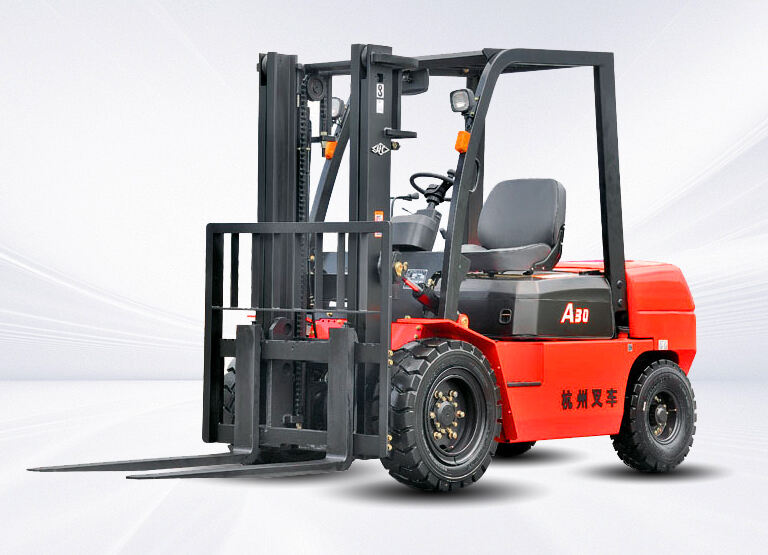
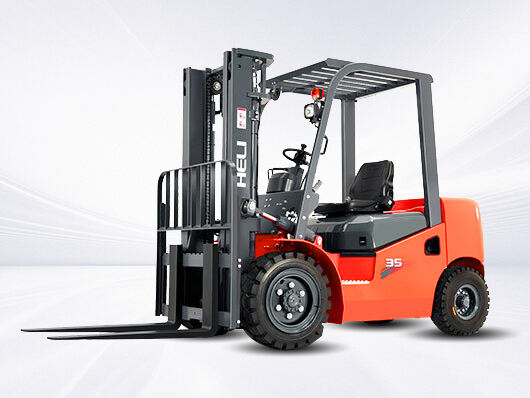
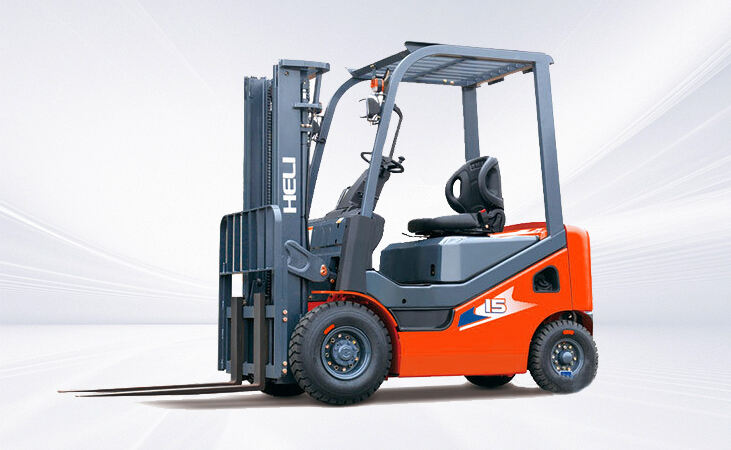
The counterbalance forklift is the undisputed workhorse of the material handling world, its iconic design built around a fundamental principle of physics: counterbalancing. Its enduring popularity stems from its straightforward yet highly effective architecture, which provides unparalleled versatility across countless industries. While it boasts many features, its defining characteristics are its namesake counterweight system, its exceptional maneuverability in open spaces, and its wide range of available powertrains and capacities to suit any task.
The counterbalance mechanism is the core of its design. A significant mass, typically made of cast iron or steel, is integrated into the rear frame of the forklift. When the hydraulic mast lifts a load at the front, this weight acts as a lever to counteract the load's tendency to tip the truck forward. This elegant solution allows the forklift to pick up and carry loads within its rated capacity without the need for stabilizing outriggers. This enables the forklift to approach a load directly, rather than from the side, streamlining the picking and placing process. The stability provided by this system is rigorously tested and certified, ensuring safe operation even when handling loads at maximum height, provided the operator adheres to safety protocols.
This design directly contributes to its second key feature: superb maneuverability in open areas. Without the protruding arms of a reach truck or the outriggers of a telehandler, the counterbalance forklift has a compact footprint relative to its lifting capacity. This allows it to turn tightly in open spaces, navigate around dock areas, and enter and exit trailers with relative ease. The standard three-point suspension (two drive wheels at the rear and a central load wheel at the front) provides stability and a small turning radius. Many models feature rear-wheel steering, which, while sometimes counterintuitive for new operators, allows for extremely sharp turns, enabling the forks to pivot precisely into position when aligning with a pallet.
Finally, the diversity in power and configuration is a massive advantage. Counterbalance forklifts are not a one-size-fits-all solution. They are manufactured in a vast spectrum. For indoor, emission-sensitive environments, electric models offer quiet, zero-exhaust operation. For heavy-duty outdoor applications, rugged diesel engines provide high torque, durability, and easy refueling. LP-gas models offer a clean-burning compromise suitable for both indoor and outdoor use. Furthermore, they come in capacities ranging from small 1-ton models for light warehouse duty to massive 50-ton+ machines for shipping and heavy industry. This adaptability means that for almost any standard lifting and transporting task, a counterbalance forklift can be configured to do it efficiently, reliably, and cost-effectively, cementing its status as the fundamental tool of material handling.

 EN
EN