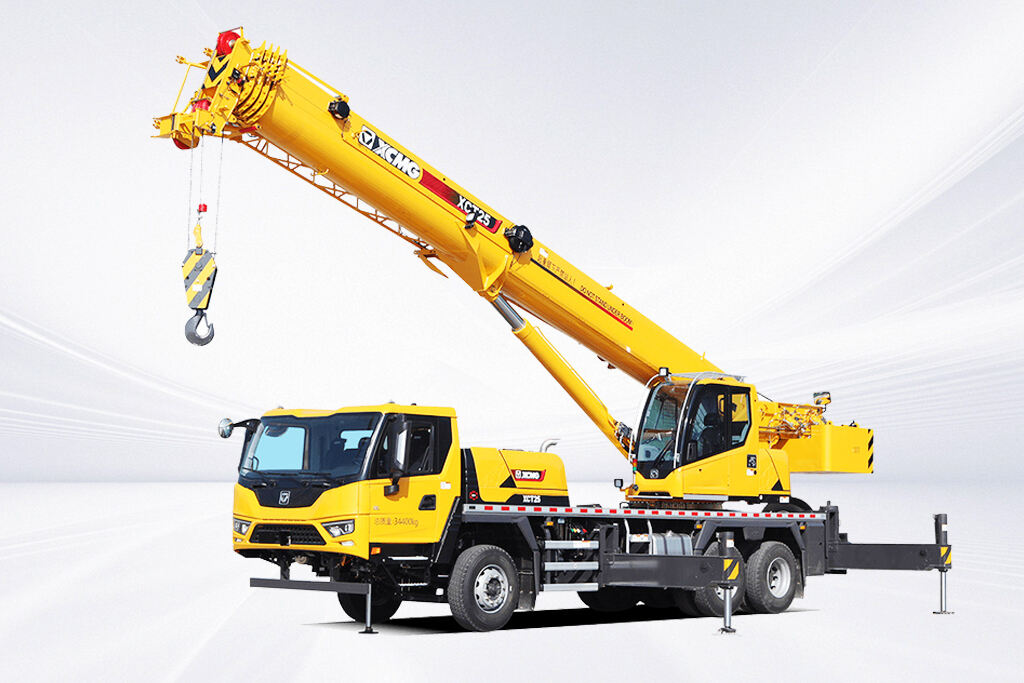
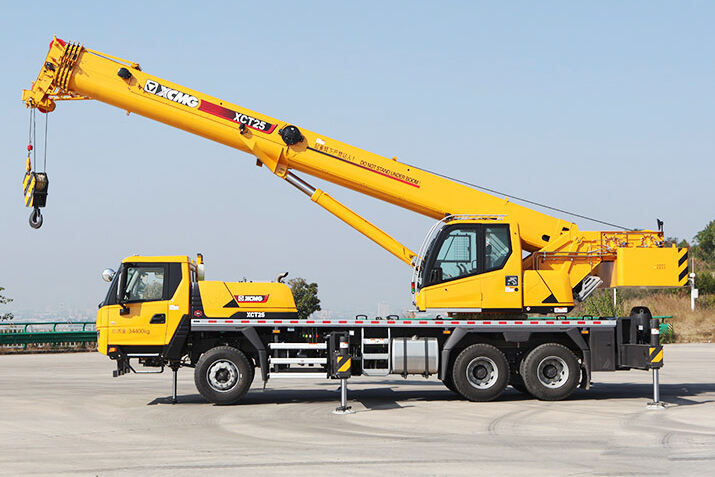
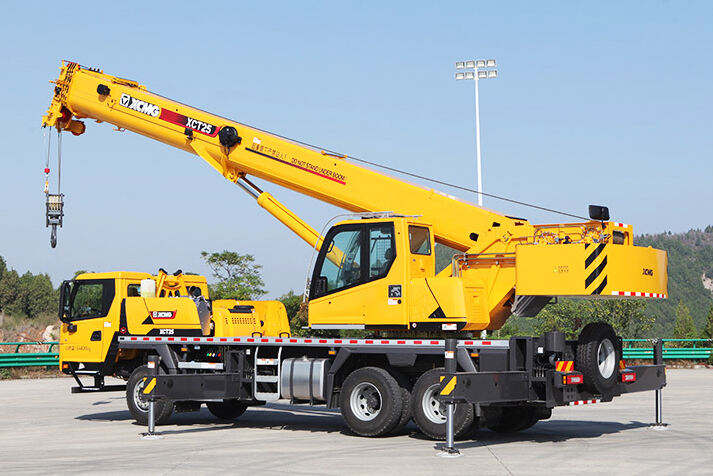
The Massive Load-Bearing Structure and Boom System is the backbone of this machine. The crane is mounted on an incredibly robust carrier chassis, specifically designed with a multi-axle configuration to distribute the enormous weight of the crane itself and the loads it carries. The centerpiece is the high-capacity, multi-stage Telescopic Boom, constructed from special high-strength steels. This boom can have four, five, or even more telescoping sections, allowing it to achieve great heights from a compact transport configuration. To further extend its reach and versatility, these cranes are almost always equipped with a Lattice Jib attachment. This lightweight yet strong lattice structure pins to the end of the main telescopic boom, adding significant length for tasks like placing equipment on tall buildings or performing maintenance inside large industrial facilities, albeit at a reduced capacity.
The immense lifting force generated by the boom creates massive overturning moments, which are countered by an Extensive Stabilization System. Big crane trucks are outfitted with heavy-duty box-type hydraulic outriggers that feature both horizontal and vertical telescoping sections. These outriggers extend outwards and downwards to create an exceptionally wide and stable footprint, often significantly wider than the truck itself. A key feature is Automatic Leveling; sophisticated hydro-pneumatic or electronic systems ensure that the entire crane base is perfectly level before lifting commences, even on highly uneven terrain. This vast, level base is absolutely non-negotiable for safely utilizing the crane's full capacity chart and is what allows these machines to lift weights that would easily tip a standard truck.
Governing this immense power is a Sophisticated Electronic Control and Safety Architecture. The core of this system is an advanced Moment Limiter (RCL – Rated Capacity Limiter). This on-board computer continuously monitors inputs from sensors measuring boom length, boom angle, load pressure, and swing angle. It calculates the actual load moment and compares it in real-time to the crane's rated capacity for that specific configuration. It provides constant visual readouts of the load and capacity percentage to the operator and will automatically intervene to block dangerous movements if limits are approached, overriding operator commands to ensure safety. Operators control this complex machinery via Pilot Hydraulic Controls or even full Remote Radio Control, allowing them to position themselves for optimal visibility. These electronic systems also provide Fault Self-Diagnosis, alerting the operator to potential hydraulic or electrical issues before they lead to downtime, ensuring maximum reliability and operational safety on critical job sites.