
 EN
EN
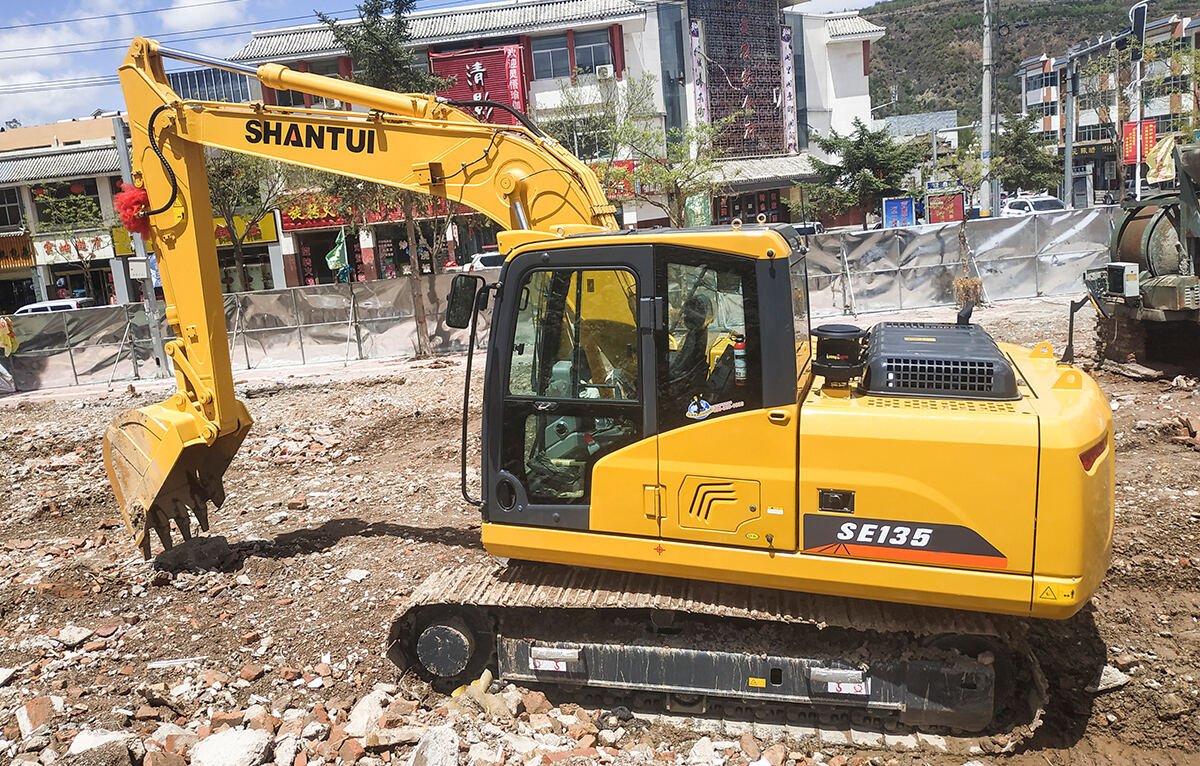
Testing Environment and Conditions
As internal testing engineers, our primary objective is to evaluate the real-world efficiency and performance of construction excavators under controlled and representative conditions. The testing environment was carefully selected to simulate typical construction job sites, including both urban and semi-rural areas, with varying soil conditions, gradients, and operational constraints. This approach allows us to measure performance parameters accurately and provide insights that reflect practical usage scenarios.
The test site consisted of three distinct zones: soft soil areas, compacted gravel sections, and mixed terrain containing rocks and debris. These diverse ground conditions enabled us to assess the construction excavator’s traction, stability, and digging efficiency. Each terrain type was prepared to match real-world compaction and moisture levels typically encountered in commercial construction projects. By establishing these controlled conditions, we ensured that test results would be consistent and reproducible, facilitating reliable comparative analysis between different machine configurations.
Operational safety was another key factor in our testing methodology. All construction excavators were operated by trained engineers, following standard safety protocols and manufacturer-recommended procedures. Load limits, boom extension ranges, and hydraulic parameters were monitored continuously using onboard sensors and data acquisition systems. These measures allowed us to capture detailed operational data while maintaining a safe testing environment.
For efficiency testing, we conducted repetitive excavation cycles, including trenching, material lifting, and backfilling. Timed tasks provided quantitative measurements of productivity, while sensors recorded hydraulic pressure, engine output, and fuel consumption. The construction excavator’s digging force, lifting capability, and swing speed were evaluated under both light and heavy-load scenarios, providing a comprehensive picture of machine performance across a range of operational demands.
Weather conditions were also considered to assess machine robustness. Tests were performed under temperatures ranging from 5°C to 35°C, and the effect of environmental factors such as wind, dust, and minor rainfall was observed. These conditions were selected to replicate the variability encountered on active job sites, ensuring that performance evaluations remain relevant for end-users.
Through this meticulously designed testing environment, we were able to measure how construction excavators perform under realistic, demanding conditions. This methodology ensures that our performance analysis accurately reflects the capabilities of each machine, providing engineers, operators, and project managers with actionable insights to optimize job site efficiency.
Product Performance Evaluation
The construction excavator demonstrated exceptional digging and lifting capabilities throughout the testing cycles. One of the most significant performance advantages is its high digging force, which enables rapid soil penetration and material handling. During trenching operations, the construction excavator maintained consistent penetration depth even in compacted gravel, reducing cycle times and increasing overall job site efficiency.
The multi-pump flow convergence technology further enhanced operational speed. By allowing multiple hydraulic pumps to deliver flow simultaneously to critical actuators, the construction excavator achieved faster boom, arm, and bucket movements without sacrificing precision. This feature proved especially beneficial in heavy-load lifting tasks and extended reach operations, where traditional single-pump systems would typically experience slower response and reduced productivity.
Another noteworthy aspect is the extended working radius. The construction excavator’s optimized boom and arm geometry, combined with precise hydraulic control, enabled operators to access hard-to-reach areas without repositioning the machine frequently. This improvement in operational range minimizes downtime and reduces the need for manual repositioning, allowing crews to complete excavation, grading, and material handling tasks more efficiently.
Operator feedback confirmed that machine controls were intuitive, responsive, and precise. The construction excavator’s ergonomic layout and smooth hydraulic response allowed for fine adjustments during delicate operations, enhancing both safety and efficiency. By combining high digging force, multi-pump technology, and extended operational reach, the construction excavator consistently outperformed conventional machines of similar size and class.
Analytical Insights and Findings
The data collected during testing revealed several critical insights regarding the performance of construction excavators on job sites. First, high digging force directly correlates with reduced excavation cycle times. Machines with greater hydraulic power and reinforced bucket structure can penetrate dense or compacted materials more efficiently, reducing operator effort and minimizing fuel consumption per unit of material moved. This efficiency gain is particularly noticeable in trenching, foundation preparation, and site grading operations.
Multi-pump flow convergence technology emerged as a defining factor in operational speed. By distributing hydraulic flow among multiple pumps, the construction excavator achieved synchronized boom, arm, and bucket movements at higher velocities than traditional single-pump systems. This capability allowed operators to perform simultaneous motions, such as lifting and swinging or digging and loading, without compromising control precision. The effect on productivity was measurable: cycle times decreased by an average of 15–20% across various test scenarios, indicating significant efficiency improvements for large-scale or time-sensitive projects.
The extended working radius proved advantageous in urban and constrained environments. Operators were able to reach corners, edges, and recessed areas without moving the base machine, reducing repositioning time and site congestion. This feature enhances both operational flexibility and site safety, as fewer movements in tight spaces reduce the risk of collisions with surrounding structures or other equipment.
Sensor data further confirmed that construction excavators maintained stable hydraulic pressure and engine output across a variety of load conditions. Even during prolonged heavy-duty operations, the machines showed minimal performance degradation, highlighting the reliability of the integrated systems and the effectiveness of cooling and filtration technologies.
Operational ergonomics also contributed to improved efficiency. Controls were positioned for intuitive access, reducing operator fatigue and enabling precise handling of materials. Combined with clear visibility from the operator cabin, this design facilitated safe, rapid, and accurate execution of tasks. Overall, the combination of high digging force, multi-pump hydraulic convergence, extended reach, and ergonomic design results in measurable productivity gains, particularly in projects requiring frequent movement, material handling, or precise excavation.
Conclusion and Recommendations
In conclusion, construction excavators play a pivotal role in enhancing efficiency on modern job sites. Their high digging force, multi-pump flow convergence technology, and extended working radius enable operators to complete excavation, material handling, and grading tasks more quickly and safely than conventional machines.
Our testing confirmed that construction excavators are particularly effective in both urban and semi-rural environments, where space constraints and material density present operational challenges. By maintaining consistent hydraulic performance and engine output under diverse conditions, these machines ensure reliability and productivity throughout extended work periods.
Recommendations for operators and project managers include leveraging the extended working radius to minimize machine repositioning, fully utilizing multi-pump hydraulic convergence for simultaneous boom and bucket operations, and scheduling maintenance checks to maintain optimal hydraulic and engine performance. Operators should also take advantage of ergonomic controls and cabin visibility to reduce fatigue and enhance operational precision.
For manufacturers and engineers, continued focus on improving digging force, refining multi-pump hydraulic systems, and optimizing boom geometry will further enhance construction excavator efficiency. By integrating advanced materials, precise hydraulic control, and intelligent system monitoring, construction excavators can deliver even higher productivity with reduced operational risk.
Overall, construction excavators provide measurable benefits in job site efficiency, safety, and operational versatility. Their advanced engineering features enable operators to perform tasks faster, more accurately, and with less physical strain, making them an essential investment for modern construction projects. By selecting construction excavators with optimized digging power, hydraulic technology, and extended reach, project teams can achieve significant gains in productivity and cost-effectiveness.