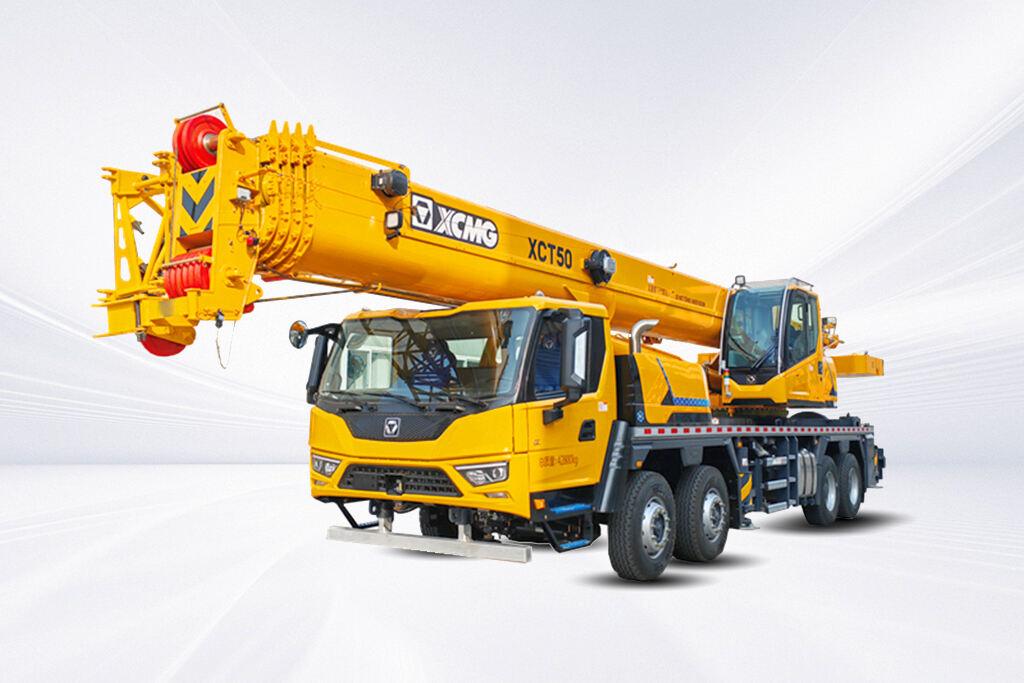
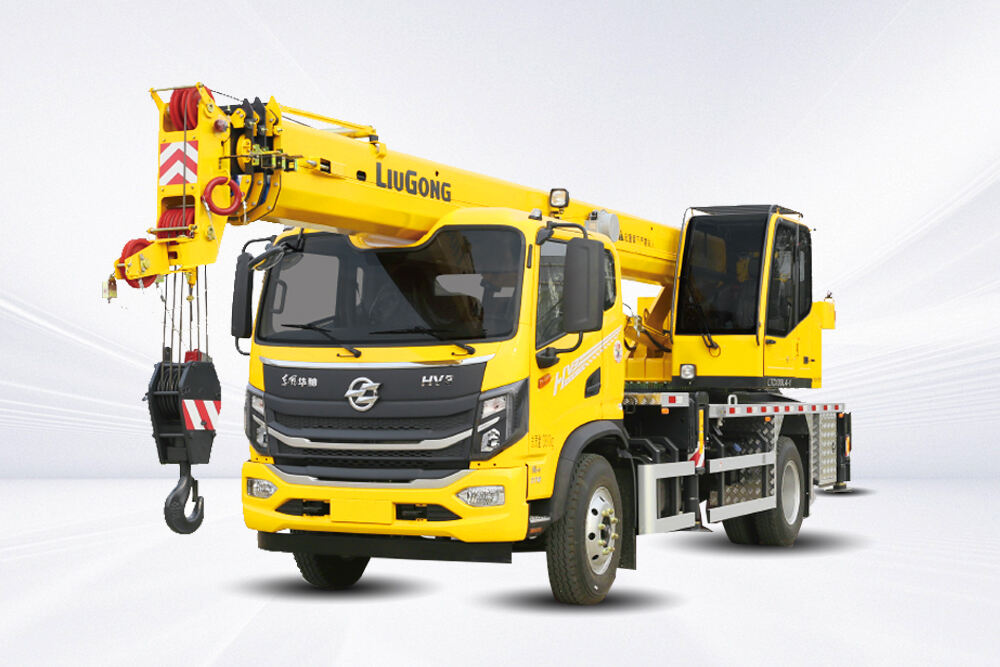
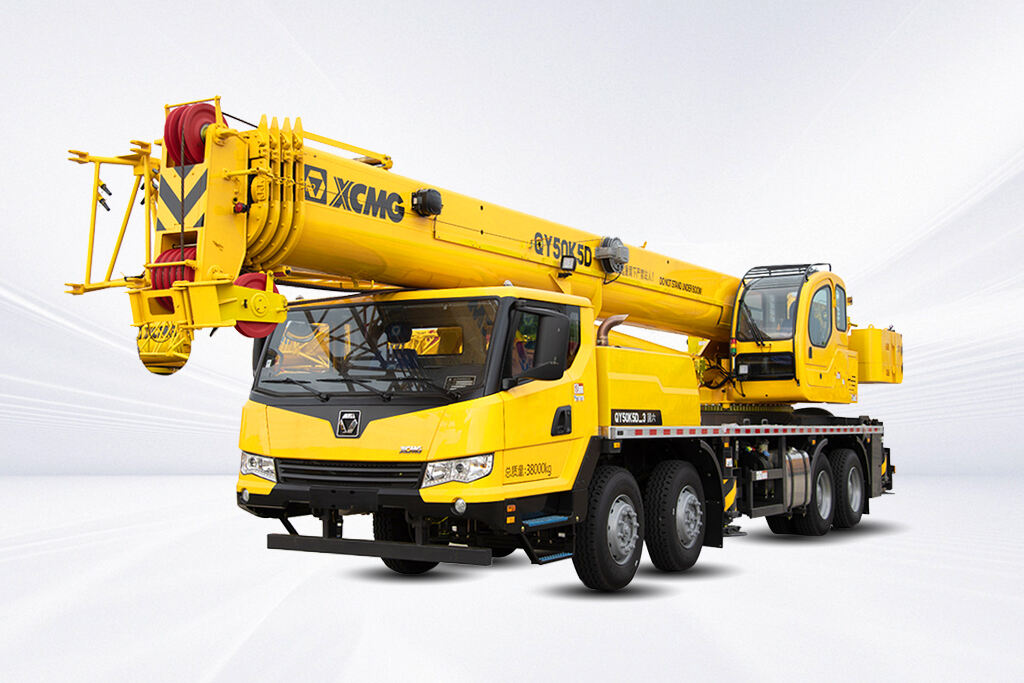
The term "truck crane" typically refers to a crane mounted on a standard truck chassis, offering a powerful and mobile lifting solution. It is designed for exceptional transportation efficiency and quick setup on various job sites, from urban construction to remote utility projects. This configuration provides the dual functionality of a cargo carrier and a capable lifter, making it ideal for applications where materials need to be transported and then lifted into place without a second vehicle. Truck cranes commonly feature hydraulic telescopic booms for adaptable reach, full-circle rotation for precise load placement, and stabilized outriggers to ensure safety during lifting operations. They are available in a wide range of capacities, from smaller units for light industrial work to larger models capable of handling significant weights. The primary advantage of a truck crane is its self-contained nature, enabling a single operator to drive to a location and perform lifting tasks immediately, drastically improving workflow efficiency and reducing equipment costs.
The heart of the truck crane's functionality is its Robust Multi-Section Telescopic Boom. Fabricated from high-strength, low-alloy steel, the boom consists of multiple box-type sections that slide within one another. Powered by a high-pressure hydraulic system, these sections extend sequentially to achieve remarkable working heights and radii while maintaining a compact profile for over-the-road travel. The boom is mounted on a full-rotation slewing ring, granting 360-degree continuous movement for unparalleled placement flexibility. The boom head is typically fitted with a sheave group to accommodate the hoist rope, and many models offer optional jib extensions or lattice fly jibs to further enhance reach for specific, lighter-duty applications.
A critical component for safe operation is the establishment of a Stable Lifting Foundation via Outriggers. Before any significant lift is attempted, the truck crane must be stabilized. This is achieved through hydraulic outrigger beams that extend horizontally from the sides of the truck chassis. These beams, often with vertically extending boxes or pistons, are deployed to significantly increase the crane's footprint. Modern systems frequently include automatic leveling features, ensuring the entire crane base is perfectly horizontal even on sloping or uneven ground. This wide, level base is absolutely essential for counteracting the immense overturning forces generated during a lift, allowing the crane to operate safely at a significant percentage of its rated capacity. The outriggers lift the truck's tires off the ground, transferring all stability to this engineered foundation.
The force behind every movement is the Powerful and Efficient Hydraulic System. Driven by a high-power engine, typically the truck's own power take-off (PTO) or a dedicated engine, the hydraulic system comprises pumps, valves, motors, and cylinders that work in harmony. This system provides the immense force needed to extend the heavy boom, hoist multi-ton loads, and swing the superstructure. Modern systems are designed for efficiency, reducing fuel consumption and heat generation. The operator controls this immense power with precision using Pilot Hydraulic Controls, which use low-pressure hydraulic signals to actuate the high-pressure main valves. This results in smooth, effortless, and proportional control, allowing for expert-level precision and micro-movement even for less experienced operators, ensuring safe and accurate load placement in complex and confined work environments.

 EN
EN