We operate in the world of mega-machines, supplying large wheel loaders to the mining and major earthmoving sectors. These machines are capital-intensive investments, and we provide them with the highest level of technical support and service. Our team includes experts who understand the intense operating cycles and productivity demands of these environments. We are a partner to the industry, providing the tools and support needed to achieve unparalleled production targets.
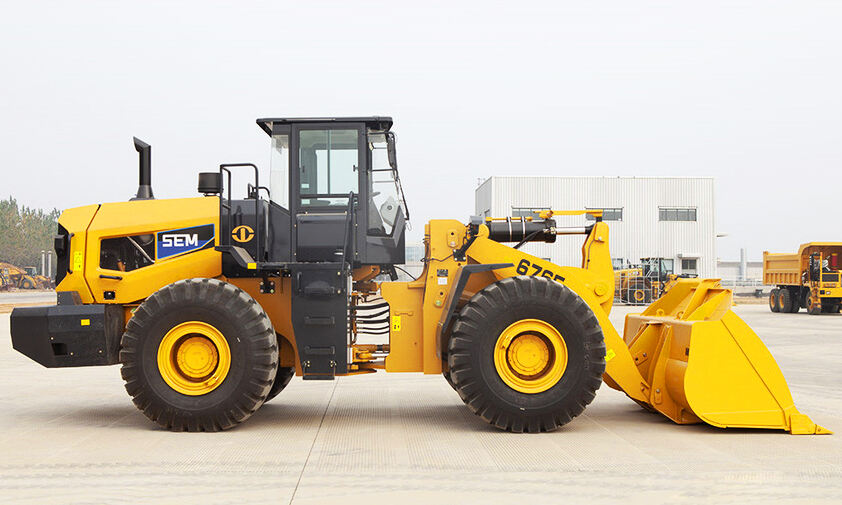
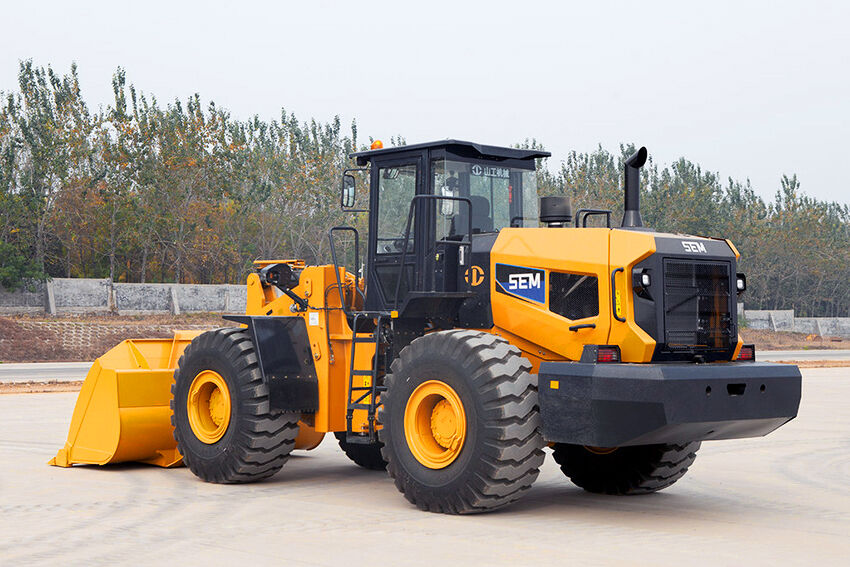
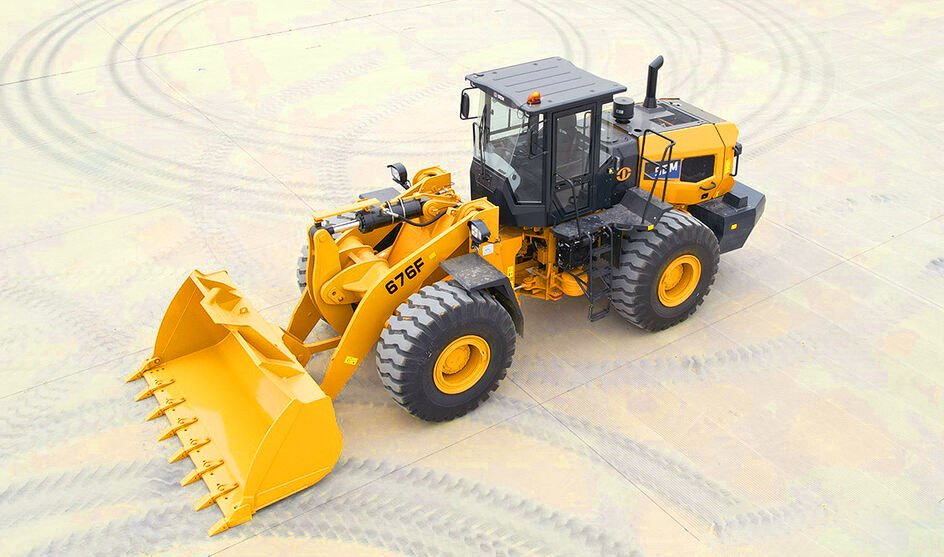
The Large Wheel Loader is a titan of productivity, engineered for one primary purpose: moving vast quantities of material as efficiently and reliably as possible in the most challenging environments. It represents a significant scale-up in power, capacity, and durability from medium-sized loaders. Its design philosophy is centered on maximizing output per hour, which is achieved through three key pillars of its engineering: the High-Capacity Powertrain for Production, the Robust Linkage for Extreme Forces, and the Stable and Durable Chassis Design.
The High-Capacity Powertrain for Production is what enables the large wheel loader to perform its demanding duties. At its core is a high-horsepower Diesel Engine, often exceeding 500 HP, designed to provide the constant power needed for aggressive digging and high travel speed between the pile and the haul truck. This engine is meticulously calibrated to meet stringent emission standards without sacrificing performance. It is coupled with a sophisticated Torque Converter and a multi-speed Planetary Transmission. This combination provides the crucial torque multiplication needed to initiate movement with a full bucket and the multiple gear ranges required for efficient travel both loaded and unloaded. The entire system drives a permanent Four-Wheel Drive system with massively built axles designed to withstand the incredible stresses of constant loading and the shock of traversing rough quarry or mining terrain. This powertrain is not just about power; it's about delivering that power reliably, shift after shift, with a focus on Fuel Efficiency to keep operating costs manageable.
The interface between the machine's power and the material is the Robust Linkage for Extreme Forces. Large loaders typically employ a Z-bar linkage design, which is optimized for generating maximum Breakout Force. This is the downward and curling force applied by the bucket teeth to penetrate and break out densely packed material. The hydraulic system is equally impressive, often featuring a Dual-Pump Convergence System that combines the flow of two hydraulic pumps to provide maximum speed and power for simultaneous lifting and tilting, thereby reducing cycle time. The cylinders for the boom and bucket are large-bore and designed to operate at high pressures, generating the forces needed to lift a fully loaded bucket weighing tens of thousands of pounds to the height required to clear the sides of large haul trucks. The bucket itself is a massive, wear-resistant assembly, often equipped with a Quick Coupler to allow for changing between a general purpose bucket and a rock bucket or other specialized attachment.
All this power and force must be channeled through a Stable and Durable Chassis Design. The articulated frame of a large wheel loader is constructed from incredibly thick, high-strength steel plates and castings to resist flexing and metal fatigue. A key feature contributing to stability is the Long Wheelbase. Compared to smaller loaders, a large loader has a significantly longer distance between its axles. This design dramatically improves stability, increasing the machine's Tipping Load capacity and making it feel more secure and planted, especially when carrying a heavy load at full height. The longer wheelbase also provides a smoother ride over rough ground, reducing operator fatigue and stress on the machine's structure. The articulation joint is a heavily reinforced pivot point designed for a long service life under constant stress. Every component, from the frame to the pins and bushings, is oversized and built to endure the punishing conditions of high-production environments, ensuring maximum uptime and a long operational lifespan.

 EN
EN