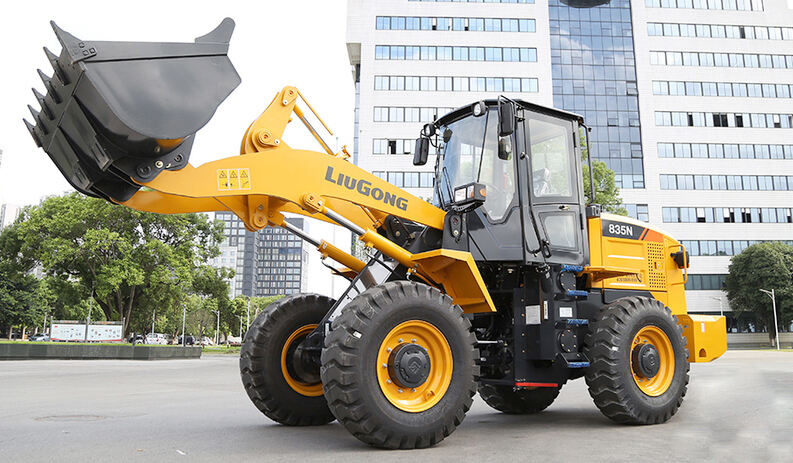
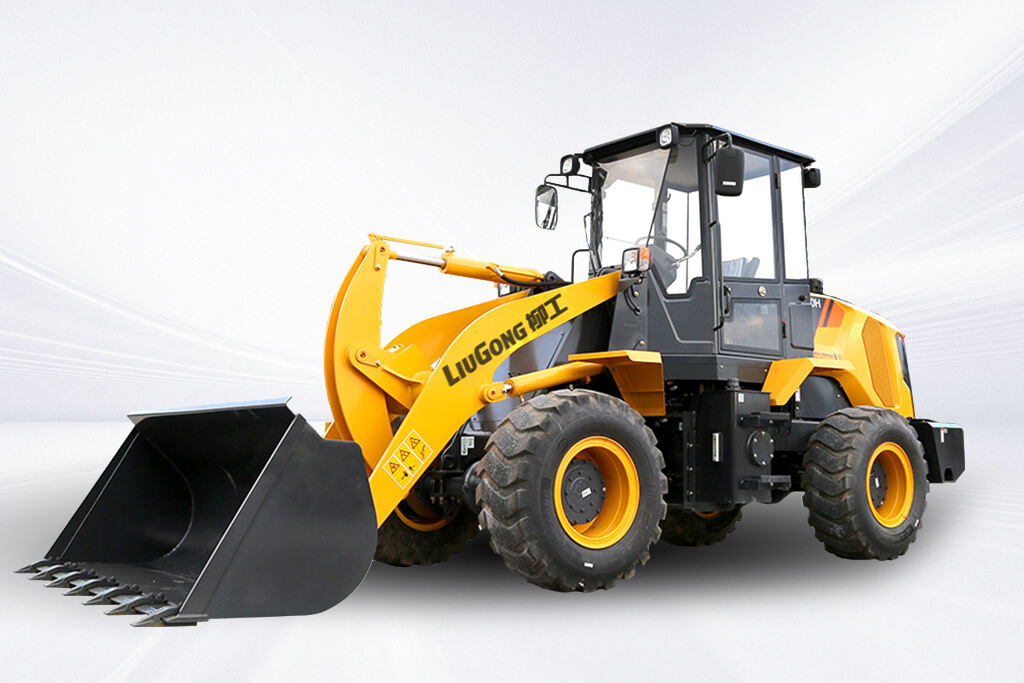
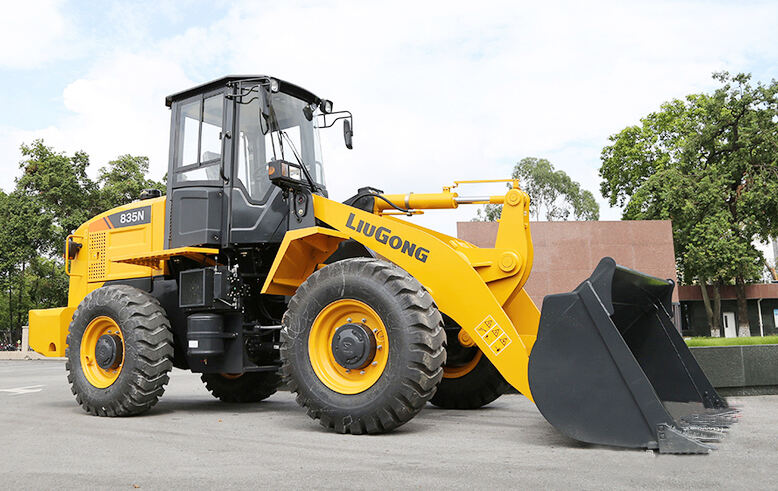
The world's largest wheel loader offers numerous compelling advantages that make it an invaluable asset for large-scale mining and construction operations. Its exceptional payload capacity of 72 tons per lift dramatically reduces the number of trips required to move material, leading to significant time and cost savings. The machine's diesel-electric drive system provides superior fuel efficiency compared to conventional hydraulic drives, resulting in lower operating costs despite its massive size. The advanced control systems allow for precise material handling, reducing spillage and improving overall operational efficiency. The loader's robust construction ensures exceptional durability and reliability, minimizing maintenance downtime and extending its operational lifespan. Its high ground clearance and powerful drive system enable it to operate effectively in challenging terrain conditions, maintaining productivity in various environmental situations. The ergonomic cabin design, featuring advanced air suspension and climate control, reduces operator fatigue during long shifts, contributing to increased productivity and safety. The loader's advanced monitoring systems provide real-time performance data, enabling proactive maintenance and preventing costly breakdowns. Its impressive breakout force allows it to handle even the most challenging materials, while the quick-cycle times ensure optimal productivity. The machine's articulated steering system provides excellent maneuverability, allowing it to operate efficiently in confined spaces despite its massive size.
The Biggest Wheel Loaders are the kings of the material handling world, engineering marvels designed for a singular purpose: relentless production on a gargantuan scale. They operate in a realm where efficiency is measured in seconds per cycle and cost is measured in pennies per ton moved. These are not merely large loaders; they represent a different class of machine altogether, built around the economies of scale required in modern mining. Their design and operation are dominated by three overarching principles: Ultimate Structural Integrity and Load Capacity, High-Density Power Generation and Transfer, and Production Optimization and Operator Assistance.
Ultimate Structural Integrity and Load Capacity is the foundation of these giants. Every component is massively overbuilt compared to a standard loader. The main frame and articulation joint are constructed from steel plates and castings of immense thickness, designed to resist the phenomenal twisting and bending forces encountered when digging into a blasted rock pile. The loader linkage is a heavy-duty Z-bar mechanism, engineered to translate hydraulic power into unprecedented Breakout Force, capable of tearing apart the most densely packed materials. The bucket is a massive, wear-resistant assembly, often made from special boron steels and lined with numerous replaceable wear parts to ensure long life in highly abrasive conditions. The axles, wheels, and tires are built to an enormous scale to support the machine's own weight plus the multi-ton load in the bucket. The Tipping Load capacity—the load weight that would cause the machine to become unstable—is an astronomical figure, essential for safely handling these massive buckets.
Generating and managing the power required for this work is the realm of High-Density Power Generation and Transfer. The prime mover is typically a high-horsepower, low-speed diesel engine from a top-tier manufacturer (e.g., Cat, Cummins, MTU), often from a series designed for locomotives or marine applications. This engine is coupled to a heavy-duty, multi-speed Planetary Power Shift Transmission designed to handle the incredible torque loads. In some of the very largest models, the drivetrain may abandon purely mechanical systems altogether in favor of diesel-electric or electric drive, where the diesel engine acts as a generator powering individual electric motors at each wheel. This setup provides exceptional torque control and traction. The hydraulic system is high-flow and high-pressure, featuring multiple pumps to ensure fast response times for the massive lift and tilt cylinders. The cooling systems for the engine, transmission, and hydraulics are correspondingly large, designed to reject the immense heat generated during continuous operation and maintain optimal operating temperatures.
The human element is integrated through Production Optimization and Operator Assistance. The operator's cab is a command center, elevated to provide a Panoramic View of the loading area and the haul truck. It is equipped with ROPS/FOPS protection, advanced Air Conditioning, and superior sound dampening to create a comfortable and safe environment for the operator during long shifts. The controls are typically Pilot Hydraulic for precise manipulation of the giant bucket. However, the operator is assisted by sophisticated technology. Payload Measurement Systems are often integrated, weighing the load in the bucket in real-time to ensure each haul truck is filled to its optimal capacity without being under or overloaded. Machine Health Monitoring systems provide continuous Fault Self-Diagnosis, alerting the operator and maintenance team to potential issues before they cause downtime. Some systems even offer semi-automation, such as "return-to-dig" functions that automate the reversal sequence after dumping, ensuring consistent and efficient cycle times. The goal of all this technology is to help the operator achieve maximum productivity while protecting the multi-million-dollar asset.

 EN
EN